Revenue Protection and Water Loss Management
$3500.00
Revenue Protection and Water Loss Management - 5-Day Professional Training Course
Course Overview
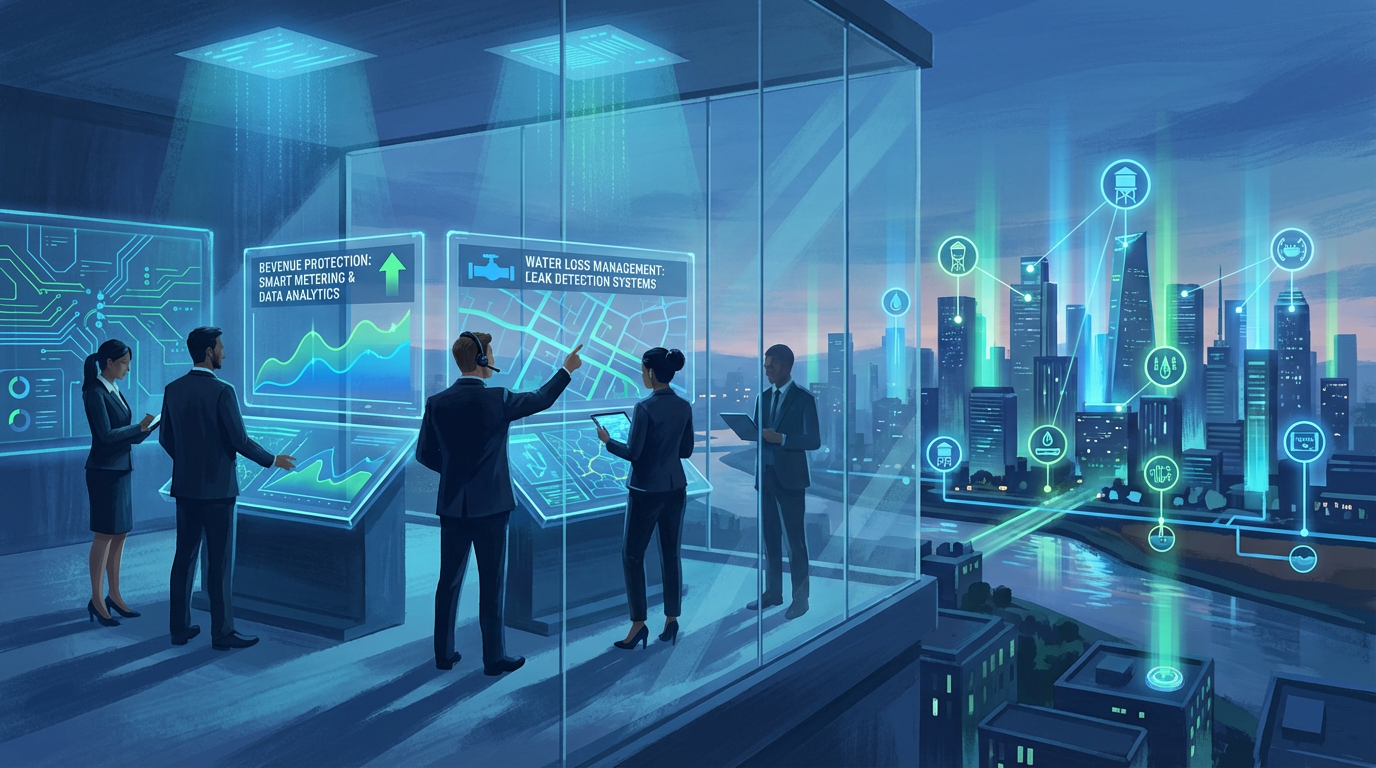
This revenue protection and water loss management training provides comprehensive strategies for maximizing utility revenues and minimizing non-revenue water. With global water losses costing utilities $39 billion annually and commercial losses adding 5-15% revenue leakage, effective revenue protection programs deliver 20-40% NRW reduction and 10-25% revenue recovery within 2-3 years. This course combines technical water loss control with commercial loss prevention, customer metering excellence, and billing optimization creating sustainable financial performance.
Target Audience
Utility revenue managers
Commercial operations managers
Metering and billing supervisors
Customer service department heads
Loss control specialists
Water utility financial officers
Operations managers
Regulatory compliance officers
Day 1: Revenue Water Cycle and Loss Components
Morning Session: Revenue Protection Framework
The Business Case for Revenue Protection
Water utilities face dual revenue challenges: physical water losses (real leakage) and commercial losses (metering errors, theft, billing inaccuracies). Combined, these create non-revenue water (NRW) averaging 30-50% in developing countries and 10-20% in developed nations.
Financial impact example: 10,000 connection utility with 35% NRW producing 5 million m³ annually at $0.50/m³ production cost and $1.50/m³ tariff loses $2.625 million annually, representing 52% of potential revenue.
IWA water balance framework:
System input volume (metered/estimated production)
Authorized consumption (billed/unbilled)
Water losses (apparent and real)
Non-revenue water calculation
Afternoon Session: Apparent Loss Components
Commercial Losses Breakdown
Customer meter inaccuracies - Typical under-registration 2-8% due to mechanical wear, low-flow consumption below start rates, aging degradation, and incorrect sizing. Represents 40-60% of apparent losses.
Unauthorized consumption (theft) - Illegal connections, meter bypasses, tampering. Estimates range 5-20% of system input in poorly controlled utilities, concentrated in informal settlements.
Data handling errors - Meter reading mistakes, transposition errors, incorrect classifications, wrong tariff applications. Contributing 1-3% apparent losses.
Unbilled authorized consumption - Firefighting, system flushing, municipal buildings. Should be <2% in well-managed utilities.
Quantification methods:
Meter testing programs establishing accuracy profiles
Consumption pattern analysis identifying anomalies
Customer database audits revealing gaps
Field investigations documenting unauthorized connections
Workshop:
Calculating apparent losses using IWA methodology, quantifying meter under-registration, estimating theft levels, and prioritizing interventions by financial impact.
Day 2: Customer Metering Excellence and Technology
Morning Session: Meter Management Strategies
Optimizing Metering Accuracy
Meters are revenue instruments requiring active management. 3% under-registration on $1 million annual revenue costs $30,000 yearly.
Meter technologies:
Mechanical - Cost-effective ($30-80), 8-12 year life, accuracy degrades
Electromagnetic - High accuracy (±0.5%), expensive ($300-800), commercial/industrial
Ultrasonic - Excellent accuracy, 12-15 year battery life ($150-250), AMI compatible
Meter sizing principles - Avoid oversizing; ensure normal flows operate within optimal accuracy range (middle third of meter range).
Testing programs:
Statistical sampling (AWWA standards)
Sample size determination (95% confidence, ±2-3% error)
Acceptance criteria (±2% threshold)
Age-based accuracy curves by meter type
Optimal replacement strategies:
Economic analysis: replacement cost versus revenue loss
Typical cycles: 8-12 years mechanical, 12-15 years ultrasonic
Prioritization: largest customers, oldest meters, highest under-registration
Afternoon Session: Advanced Metering Infrastructure (AMI)
Smart Metering for Revenue Protection
AMI transforms revenue protection through continuous monitoring, immediate leak detection, and consumption transparency.
AMI components:
Smart meters with hourly+ reading
Communication networks (RF mesh, cellular, LoRaWAN)
Data management platforms with analytics
Customer portals
Revenue applications:
Leak detection - Continuous flow analysis identifies customer-side leaks, saving 10-15% residential consumption.
Theft detection - Zero/minimal consumption anomalies cross-referenced with occupancy indicators flag meter bypasses.
Billing accuracy - Eliminating estimates (typical 10-20% of bills), reducing disputes, enabling leak adjustments.
Meter malfunction detection - Identifying stopped or erratic meters preventing revenue loss.
Business case:
Investment: $150-300 per endpoint
Benefits: Operational savings, leak reduction, theft detection, billing accuracy
Payback: 5-8 years
Case Study:
Utility AMI implementations achieving 12-18% revenue recovery through combined improvements.
Day 3: Unauthorized Consumption Detection and Prevention
Morning Session: Theft Investigation Techniques
Systematic Theft Combat
Water theft represents 5-20% system input in developing countries, 1-5% in developed nations. Detection programs achieve 40-60% revenue recovery.
Detection methods:
Consumption analysis - Algorithms identifying:
Zero consumption with occupancy indicators
Abnormally low consumption versus similar properties
Sudden drops suggesting bypasses
Seasonal pattern inconsistencies
Database reconciliation:
GIS property mapping comparing registered customers to structures
Cross-referencing electricity, tax, census databases
Identifying unregistered connections and informal settlements
Field investigations:
Systematic door-to-door inspections in high-risk areas
Meter inspection detecting bypasses, tampering, illegal connections
Legal authority and safety protocols
Documentation supporting prosecution/regularization
Technology tools:
Satellite imagery identifying unauthorized developments
AMI analytics flagging suspicious patterns
Mobile inspection apps with GPS/photos
DMA analysis identifying high-loss zones
Afternoon Session: Prevention and Regularization
Creating Sustainable Protection Culture
Tamper-resistant infrastructure:
Secure meter boxes with anti-tampering seals
Remote/difficult-access installations
Inspection ports enabling verification
Installation photography
Legal framework:
Clear regulations and penalties
Prosecution procedures and evidence requirements
Disconnection policies
Criminal versus administrative approaches
Regularization programs:
Limited-time amnesty encouraging voluntary compliance
Flexible payment plans for fees and arrears
Community engagement explaining benefits
Social tariffs making service affordable
Community approaches:
Neighborhood committees reporting theft
Reward programs incentivizing reporting
Public awareness campaigns
Stakeholder engagement with community leaders
Workshop:
Developing unauthorized consumption detection program including investigation protocols, technology tools, legal framework, regularization strategy, and financial projections.
Day 4: Billing System Optimization and Data Management
Morning Session: Billing Accuracy and Data Quality
Ensuring Revenue Collection Integrity
Typical utilities lose 2-5% revenue through billing inaccuracies.
Common vulnerabilities:
Meter reading errors:
Transposition mistakes (1234 read as 1243)
Wrong meter identification
Access issues causing estimates
Reader collusion under-reporting
Processing errors:
Incorrect customer classification (commercial as residential)
Wrong tariff application
Calculation errors
System bugs or configuration mistakes
Database inaccuracies:
Outdated customer information
Incorrect property classifications
Missing/duplicate accounts
Geocoding errors
Improvement strategies:
AMR/AMI - Eliminating manual errors, providing 100% actual reads, enabling remote verification.
Exception reporting - Algorithms flagging:
Zero/negative consumption
Extreme changes (>300% increase/decrease)
Excessive estimates
High-value inconsistencies
Database cleansing:
Systematic verification campaigns
GIS integration ensuring spatial accuracy
Regular updates from municipal records
Deduplication procedures
Afternoon Session: Revenue Assurance and Controls
Protecting Revenue Through Internal Controls
Revenue assurance framework:
Reconciliation procedures:
Metered production versus billed consumption
Accounts receivable aging analysis
Payment collection versus billing issued
Write-offs justification
Cash handling verification
Segregation of duties:
Separate reading, billing, collection, adjustment authorization
Approval hierarchies for exceptions
Audit trails documenting transactions
System access controls
Performance monitoring:
Collection efficiency (>95% target)
Billing-to-cash cycle time
Adjustment rates (<2% billings)
Revenue per connection trends
Fraud prevention:
Background checks
Duty rotation and mandatory leave
Reporting hotlines
Periodic audits
Disciplinary procedures
Customer engagement:
Clear tariff structures and billing formats
Multiple payment channels
Dispute resolution procedures
Consumption history access
Workshop:
Auditing billing system, identifying vulnerabilities, quantifying revenue at risk, designing improvements, and projecting recovery.
Day 5: Integrated Program Implementation and Monitoring
Morning Session: Strategic Program Development
Building Comprehensive Revenue Protection
Program components:
Technical interventions:
Active leak detection and repair
Pressure management
Infrastructure rehabilitation
Commercial interventions:
Meter testing and replacement
AMI deployment
Theft detection and prevention
Billing accuracy improvements
Database management
Institutional requirements:
Dedicated revenue protection unit
Cross-functional coordination
Staff training
Performance-based incentives
Technology investments
Implementation roadmap:
Phase 1: Quick wins (0-6 months)
Revenue audit quantifying losses
Low-cost high-impact interventions
Pilot programs
Stakeholder engagement
Phase 2: Systematic rollout (6-24 months)
Meter replacement acceleration
AMI phased deployment
Systematic theft campaigns
Billing enhancements
Policy formalization
Phase 3: Continuous improvement (2-5 years)
Performance optimization
Technology integration
Culture embedding
Best practice adoption
Business case:
Investment requirements
Revenue recovery projections
Payback periods (2-5 years)
IRR calculations (15-30% typical)
Afternoon Session: Performance Monitoring and Sustainability
Ensuring Long-Term Success
Key Performance Indicators:
Financial metrics:
NRW percentage (target: 2-3% annual reduction)
Apparent loss volume
Revenue per connection
Collection efficiency (>95%)
Operating ratio (<80%)
Operational metrics:
Meter accuracy rates by age
Annual testing percentage (5-10%)
Unauthorized connections detected
AMI deployment percentage
Billing accuracy (estimates <5%)
Dashboard and reporting:
Monthly executive dashboards
Quarterly detailed reports
Annual strategic reviews
Peer utility benchmarking
Sustainability mechanisms:
Organizational culture:
Performance evaluations including revenue protection
Staff incentive programs
Regular training
Knowledge sharing
Technology evolution:
Emerging solutions (AI, predictive analytics)
System integration
Mobile technologies
Cloud-based platforms
Capstone Project:
Developing comprehensive 5-year revenue protection strategy including current state assessment, gap analysis, prioritized intervention plan, implementation roadmap, investment requirements, financial projections, performance monitoring framework, and executive presentation.
Course Outcomes
Graduates will master:
IWA water balance and loss quantification
Apparent loss measurement and reduction
Meter management and AMI deployment
Unauthorized consumption detection
Billing optimization and data quality
Revenue assurance and internal controls
Integrated program implementation
Performance monitoring and improvement
Certification
Participants receive SciTcc Revenue Protection and Water Loss Management Specialist certificate demonstrating expertise in maximizing utility revenues through comprehensive loss control and commercial operations excellence.
Keywords: revenue protection training, water loss management, non-revenue water, meter management, AMI systems, theft detection, billing accuracy, apparent loss control, commercial loss prevention, utility revenue optimization, NRW reduction, customer metering, unauthorized consumption, revenue assurance, water financial management