Pipeline Technology Training (Operation & Integrity)
$3500.00
Pipeline Technology Training (Operation & Integrity): Advanced 5-Day Professional Course
Course Overview
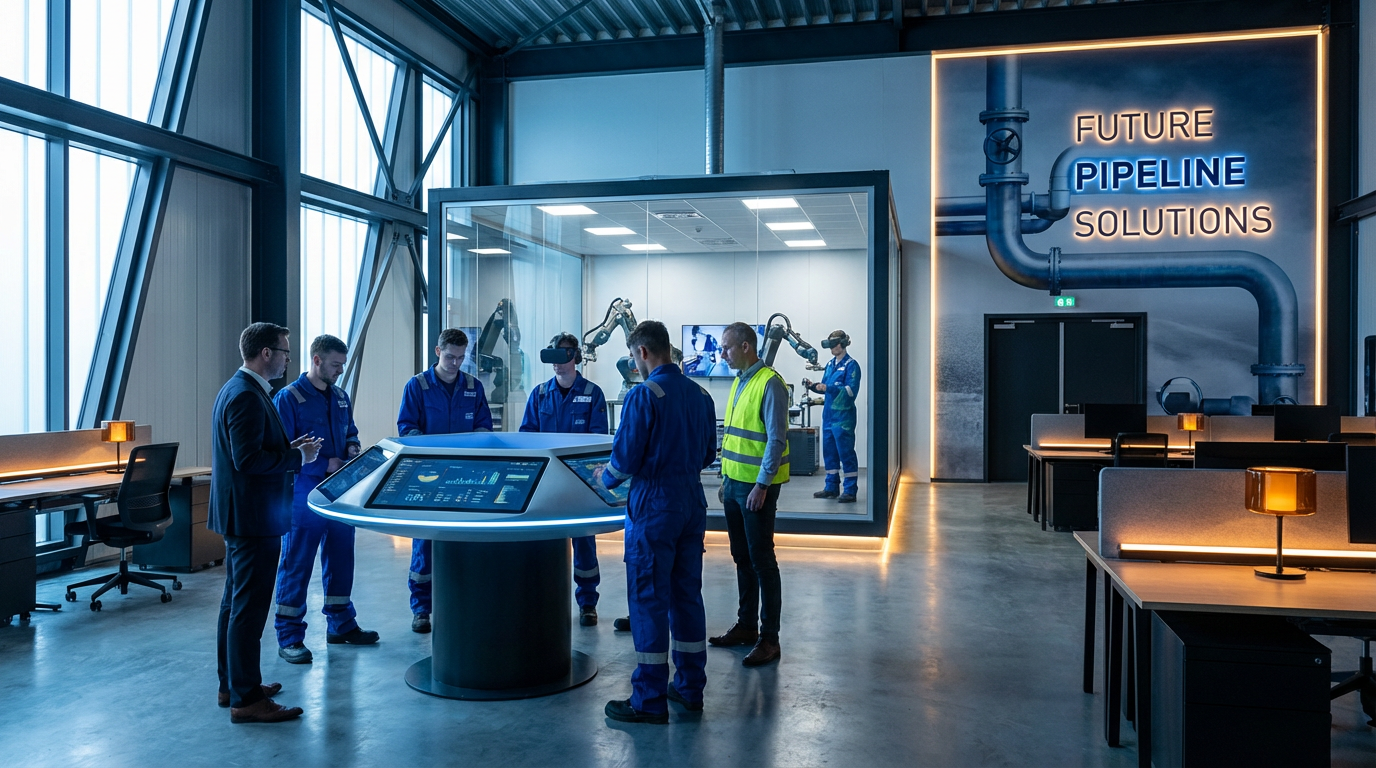
The Pipeline Technology Training (Operation & Integrity) course is a comprehensive 5-day advanced program designed for professionals seeking to master the integration of modern pipeline technologies with operational excellence and integrity management practices. This intensive training bridges the gap between traditional pipeline operations and cutting-edge technological innovations, covering pipeline integrity assessment, advanced monitoring systems, digital transformation, and risk-based asset management strategies. Participants will gain specialized knowledge in utilizing state-of-the-art pipeline technologies to enhance safety, optimize performance, and ensure long-term asset integrity.
As the pipeline industry evolves toward digitalization and automation, the integration of pipeline technology with operational and integrity management becomes increasingly critical. Modern pipeline systems leverage sophisticated sensors, artificial intelligence, advanced analytics, and real-time monitoring platforms to predict failures, optimize throughput, and maintain compliance with stringent regulatory requirements. This course equips professionals with the technical expertise and practical skills necessary to implement, operate, and maintain technology-driven pipeline integrity programs that meet today’s demanding industry standards.
Target Audience
This advanced course is ideal for:
Pipeline integrity engineers and specialists
Operations managers and supervisors
SCADA and automation engineers
Asset integrity managers
Pipeline technology coordinators
Control room operators and supervisors
Maintenance and reliability engineers
Risk assessment professionals
Regulatory compliance officers
Project engineers implementing new technologies
Consultants specializing in pipeline integrity
Day 1: Pipeline Technology Fundamentals and Modern Operating Systems
Morning Session: Introduction to Pipeline Technology and Digital Infrastructure
The opening session establishes the foundation for understanding pipeline technology evolution and its impact on operational practices. Participants explore the transformation from conventional pipeline systems to intelligent, digitally-enabled infrastructure, examining how technology integration enhances safety, efficiency, and integrity management across oil, gas, water, and multi-product pipeline networks.
Key Topics:
Evolution of pipeline technology: from manual operations to intelligent systems
Digital pipeline infrastructure components and architecture
Industry 4.0 and its application in pipeline operations
Technology integration frameworks and implementation strategies
International standards for pipeline technology: API, ASME, ISO, and NACE
Pipeline system instrumentation: sensors, transmitters, and analyzers
Data communication protocols: SCADA, DCS, and industrial IoT platforms
Cybersecurity fundamentals for pipeline technology systems
Afternoon Session: Advanced SCADA Systems and Real-Time Monitoring
Modern pipeline monitoring systems represent the cornerstone of technology-driven operations. This session provides comprehensive training on advanced Supervisory Control and Data Acquisition (SCADA) platforms, real-time data analytics, and operational decision-making support systems. Participants learn to leverage technology for enhanced situational awareness and proactive operational management.
Key Topics:
Next-generation SCADA architecture and cloud-based platforms
Real-time data acquisition, processing, and visualization
Advanced alarm management and intelligent alerting systems
Distributed control systems (DCS) integration
Remote terminal unit (RTU) and intelligent electronic device (IED) configuration
Operational data historians and time-series databases
Performance dashboards and key performance indicators (KPIs)
Mobile technology for field operations and remote monitoring
Human-machine interface (HMI) design and usability optimization
Day 2: Integrity Assessment Technologies and Inline Inspection
Morning Session: Pipeline Integrity Management Framework and Technology Integration
Day two focuses on pipeline integrity management methodologies enhanced by technological innovations. Participants explore comprehensive integrity management programs that leverage data analytics, risk modeling, and advanced assessment technologies to prioritize integrity threats, optimize inspection frequencies, and allocate resources effectively.
Key Topics:
Integrity management program (IMP) structure and implementation
Technology-enabled threat identification and assessment
Risk-based integrity management (RBIM) frameworks
Consequence modeling and failure probability analysis
Data management systems for integrity programs
Integrity operating windows (IOW) and safe operating limits
Regulatory compliance: CFR Part 192/195, Pipeline Safety Act requirements
Integrity management software platforms and applications
Integration of operational data with integrity assessment
Continual improvement through technology-driven analytics
Afternoon Session: Inline Inspection Technologies and Smart Pigging
Inline inspection (ILI) technologies represent revolutionary tools for internal pipeline assessment without operational disruption. This session delivers in-depth training on various intelligent pigging technologies, including magnetic flux leakage, ultrasonic testing, geometry measurement, and emerging inspection innovations. Participants learn tool selection criteria, run planning, data interpretation, and response protocols.
Key Topics:
Inline inspection technology overview and capabilities
Magnetic flux leakage (MFL) technology: high-resolution and ultra-high-resolution tools
Ultrasonic testing (UT): wall thickness measurement and crack detection
Electromagnetic acoustic transducer (EMAT) technology
Geometry and caliper pig technologies for deformation detection
Combination tools and multi-sensor platforms
ILI tool selection based on pipeline characteristics and threats
Pig tracking systems and passage monitoring
ILI data management, analysis, and interpretation
Dig verification programs and validation methodologies
Unity plotting and integration of multiple ILI datasets
Day 3: Advanced Leak Detection and Corrosion Monitoring Technologies
Morning Session: Computational Pipeline Monitoring and Leak Detection Systems
Leak detection technology has advanced significantly, providing operators with multiple layers of protection through sophisticated software-based and hardware-based systems. This session explores computational pipeline monitoring (CPM), statistical leak detection, acoustic systems, and fiber optic technologies, enabling participants to design and operate comprehensive leak detection strategies.
Key Topics:
Computational pipeline monitoring (CPM) systems and algorithms
Real-time transient modeling (RTTM) and leak detection sensitivity
Mass balance and volume balance methodologies
Statistical leak detection and pattern recognition
Negative pressure wave detection systems
Acoustic leak detection technology and applications
Distributed fiber optic sensing: DTS and DAS technologies
Leak detection system performance metrics and testing
False alarm management and optimization strategies
Integration of multiple leak detection technologies
Regulatory requirements for leak detection systems
Afternoon Session: Corrosion Monitoring Technologies and Cathodic Protection Systems
Corrosion monitoring technologies enable proactive corrosion management through continuous surveillance and early warning capabilities. This session covers advanced corrosion monitoring instruments, online monitoring systems, and modern cathodic protection technologies, including remote monitoring and intelligent rectifier systems that optimize corrosion control effectiveness.
Key Topics:
Corrosion monitoring technology landscape and selection criteria
Electrical resistance (ER) probes and linear polarization resistance (LPR) sensors
Corrosion coupons and retrieval programs
Ultrasonic thickness monitoring and automated systems
Internal corrosion monitoring for multiphase flow conditions
Microbiologically influenced corrosion (MIC) detection technologies
Smart cathodic protection systems with remote monitoring
Impressed current rectifiers with GPS synchronization
Close-interval potential survey (CIPS) technology and data logging
AC/DC interference detection and monitoring systems
Cathodic protection management software platforms
Predictive analytics for corrosion rate forecasting
Day 4: Risk Assessment, Data Analytics and Predictive Maintenance
Morning Session: Risk-Based Integrity Assessment and Decision Support Systems
Risk assessment technology transforms integrity management from reactive to proactive by enabling data-driven decision-making. This session explores quantitative risk assessment methodologies, consequence modeling software, and decision support systems that prioritize integrity activities based on risk profiles, optimizing safety and resource allocation.
Key Topics:
Quantitative risk assessment (QRA) methodologies for pipelines
Probability of failure (PoF) modeling using technology and data analytics
Consequence of failure (CoF) assessment tools and techniques
Risk matrix development and prioritization frameworks
Geographic information systems (GIS) integration for spatial risk analysis
Pipeline risk management software: RBIM platforms and applications
Third-party damage risk assessment and prevention technologies
Environmental sensitivity mapping and consequence assessment
Cost-benefit analysis for integrity investment decisions
Dynamic risk assessment and real-time risk monitoring
Regulatory risk assessment requirements and compliance
Afternoon Session: Big Data Analytics and Predictive Maintenance Technologies
Predictive maintenance powered by big data analytics and machine learning represents the future of pipeline integrity management. This session introduces participants to advanced analytics techniques, artificial intelligence applications, and condition-based maintenance strategies that maximize asset reliability while minimizing maintenance costs and operational disruptions.
Key Topics:
Big data architecture for pipeline operations and integrity
Data integration from multiple sources: SCADA, ILI, inspections, and maintenance
Machine learning algorithms for anomaly detection and pattern recognition
Predictive analytics for remaining life assessment
Artificial intelligence applications in pipeline integrity
Digital twin technology for pipeline performance simulation
Condition-based maintenance (CBM) strategies and implementation
Failure prediction models and early warning systems
Prescriptive maintenance recommendations through AI
Data visualization and business intelligence dashboards
Cloud computing and edge computing in pipeline operations
Return on investment (ROI) analysis for predictive maintenance programs
Day 5: Emerging Technologies, Automation and Future Trends
Morning Session: Drone Technology, Robotics and Advanced Inspection Methods
Day five explores emerging pipeline technologies revolutionizing inspection, maintenance, and operations. Participants discover how unmanned aerial vehicles (UAVs), robotics, and autonomous systems enhance efficiency, improve safety, and access previously challenging inspection scenarios, representing the cutting edge of pipeline technology advancement.
Key Topics:
Unmanned aerial vehicle (UAV) technology for pipeline patrol and inspection
Drone-based thermal imaging and methane detection systems
LiDAR technology for right-of-way management and encroachment detection
Autonomous ground vehicles (AGVs) for pipeline corridor monitoring
Robotic inspection technologies for confined spaces and difficult access areas
Autonomous underwater vehicles (AUVs) for submerged pipeline inspection
Augmented reality (AR) and virtual reality (VR) for training and maintenance support
3D scanning and photogrammetry for pipeline documentation
Satellite-based pipeline monitoring and ground movement detection
Mobile applications and wearable technology for field operations
Integration of emerging technologies with existing systems
Afternoon Session: Digital Transformation, Blockchain and Industry Future
The course concludes with digital transformation strategies and future-oriented technologies reshaping the pipeline industry. Participants explore blockchain for asset management, advanced cybersecurity, sustainability technologies, and strategic planning for technology adoption, ensuring organizations remain competitive in an increasingly digital environment.
Key Topics:
Digital transformation strategy development for pipeline operations
Blockchain technology for asset tracking and data integrity
Advanced cybersecurity frameworks for pipeline control systems
Cloud-based pipeline management platforms and software-as-a-service (SaaS)
Internet of Things (IoT) sensors and edge computing applications
5G connectivity and its impact on pipeline communications
Hydrogen pipeline technology and alternative energy transport
Carbon capture and storage (CCS) pipeline technologies
Sustainability metrics and environmental monitoring technologies
Technology implementation roadmaps and change management
Future trends: quantum computing, advanced materials, and nanotechnology
Course review, technology demonstration, and certification
Learning Outcomes
Upon completing this pipeline technology and integrity training, participants will be able to:
Integrate advanced technologies into pipeline operations and integrity programs
Operate and optimize SCADA systems and real-time monitoring platforms
Implement comprehensive inline inspection programs with proper tool selection
Deploy multi-layered leak detection systems using various technologies
Utilize corrosion monitoring and cathodic protection technologies effectively
Conduct risk-based integrity assessments using analytical tools
Apply big data analytics and predictive maintenance strategies
Leverage emerging technologies including drones, robotics, and AI
Develop digital transformation strategies for pipeline operations
Ensure cybersecurity and data integrity in technology-driven systems
Conclusion
This comprehensive 5-day pipeline technology training equips professionals with cutting-edge knowledge and practical skills for leading technology-driven pipeline operations and integrity management initiatives. By combining advanced monitoring systems, intelligent inspection technologies, data analytics, risk assessment tools, and emerging innovations, participants gain the expertise necessary to transform pipeline operations, enhance safety performance, optimize maintenance effectiveness, reduce operational costs, and position their organizations at the forefront of pipeline technology advancement in an increasingly digital and competitive energy infrastructure landscape.