
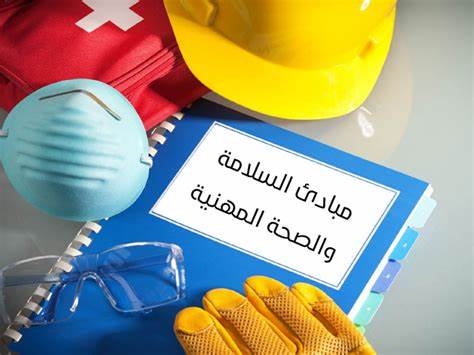
Principles of Occupational Safety and Health
Principles of Occupational Safety and Health
$5500.00
Principles of Occupational Safety & Health
5-Day Professional Training Course | POSH5001
KSA · GCC · Africa
Course Overview
This intensive 5-day training programme on the Principles of Occupational Safety and Health equips professionals with the foundational knowledge, legislative frameworks, hazard management methodologies, and safety leadership competencies needed to protect workers, comply with regulatory obligations, and build sustainable safety cultures across diverse workplace environments. Occupational safety and health is the most fundamental expression of organisational respect for human life — a discipline that sits at the intersection of engineering, law, behavioural science, and leadership, and whose failure is measured not in financial loss alone but in injury, illness, disability, and death. Across Saudi Arabia's vast construction, petrochemical, and manufacturing sectors where the workforce numbers in the millions and OSH regulatory enforcement is intensifying under Vision 2030 labour reform, GCC industries managing large multinational workforces under increasingly sophisticated national OSH frameworks, and African economies where rapid industrialisation is outpacing the development of workplace safety infrastructure, the demand for professionals who understand OSH principles deeply and can apply them practically has never been greater. Aligned with ISO 45001:2018, ILO Conventions, OSHA standards, and regional regulatory requirements, this course provides the comprehensive OSH grounding that serves as the essential foundation for every safety professional's career and every manager's duty of care.
Keywords: Occupational Safety Health Training Saudi Arabia | OSH Course GCC | Workplace Safety Training Africa | ISO 45001 OSH Riyadh · Dubai · Nairobi · Cairo
Course Information
Course Code | POSH5001 |
Duration | 5 Days (40 Contact Hours) |
Delivery Mode | Classroom · Virtual · In-House |
Language | English (Arabic support available) |
Markets | KSA, UAE, Qatar, Kuwait, Bahrain, Oman, Egypt, Nigeria, Kenya, Ghana |
CPD Credits | 40 Hours |
Certification | Certificate of Completion · NEBOSH, IOSH & ISO 45001-aligned |
Target Audience
This course is designed for professionals at every stage of their OSH career, as well as managers and supervisors carrying legal and moral safety responsibilities:
Entry and mid-level HSE officers and safety advisors building core OSH knowledge
Supervisors and line managers carrying frontline safety accountability
HR and people management professionals integrating OSH into workforce management
Construction site engineers and project coordinators with site safety responsibilities
Occupational health nurses and industrial hygienists expanding their safety framework knowledge
Government OSH inspectors and labour ministry officials in KSA and GCC
NGO and international development professionals managing worker safety across African field programmes
Any professional seeking a rigorous, internationally recognised foundation in occupational safety and health
Learning Outcomes
Upon successful completion, participants will be able to:
Explain the moral, legal, and financial case for occupational safety and health investment across any organisational context
Identify workplace hazards systematically and conduct risk assessments using internationally recognised methodologies
Apply OSH legislation, ILO conventions, and regional regulatory requirements applicable to their operating environment
Implement hazard controls using the hierarchy of controls and evaluate their effectiveness
Investigate workplace incidents using structured root cause analysis methodologies
Contribute meaningfully to the development and maintenance of a positive OSH culture within their organisation
Learning Methods
Method | Description |
|---|---|
Instructor-Led Sessions | Expert facilitation covering OSH science, legislation, hazard management, and safety leadership by experienced regional practitioners |
Hazard Identification Workshops | Participants conduct workplace hazard surveys and risk assessments using structured identification tools |
Legislation Review Sessions | Guided analysis of KSA Labour Law, GCC OSH regulations, ILO Conventions, and African national safety legislation |
Incident Investigation Simulation | Teams investigate a simulated workplace incident using structured root cause analysis methodology |
Case Studies | Occupational safety successes and failures drawn from KSA construction and petrochemical, GCC workplace incidents, and African mining and infrastructure |
Capstone OSH Improvement Plan | Each participant develops a practical OSH improvement plan for their own workplace by Day 5 |
5-Day Programme Outline
Day 1 — The Case for OSH & the Regulatory Framework
The moral imperative: the human cost of workplace injury and illness and the ethical responsibility of every employer
The financial case: direct and indirect costs of workplace accidents, insurance implications, and the return on OSH investment
The legal framework: criminal and civil liability for OSH failures, duty of care, and employer obligations
International OSH standards: ILO Conventions 155 and 187, ISO 45001:2018 overview, and OSHA General Industry Standards
Regional OSH legislation: KSA Labour Law and OSH regulations, GCC national frameworks including UAE Federal Law No. 8, Qatar Labour Law, and selected African national OSH acts
The role of the OSH professional: competencies, responsibilities, and the relationship between safety officers, management, and workers
Day 2 — Hazard Identification, Risk Assessment & Control
Hazard vs. risk: the fundamental distinction and its practical importance in OSH management
Hazard identification methods: workplace inspections, job safety analysis (JSA), HAZID, task observation, and near-miss reporting
Risk assessment methodologies: qualitative scoring matrices, semi-quantitative methods, and when quantitative assessment is required
The hierarchy of controls: elimination, substitution, engineering controls, administrative controls, and personal protective equipment — applying each level correctly
Permit to work systems: hot work, confined space entry, working at height, electrical isolation, and excavation permits
Workshop: Participants conduct a structured hazard identification exercise and develop a risk assessment for a high-risk work activity
Day 3 — Workplace Hazards: Recognition, Assessment & Control
Physical hazards: noise, vibration, radiation, extreme temperatures, and ergonomic risks — recognition and control in GCC and African industrial environments
Chemical hazards: toxic substances, carcinogens, asphyxiants, and flammable materials — COSHH assessment, SDS interpretation, and exposure monitoring
Biological hazards: occupational infections, vector-borne disease, and healthcare worker exposures — particularly relevant across African tropical working environments
Mechanical and electrical hazards: machinery guarding, lockout-tagout, electrical safety, and working at height
Psychosocial hazards: work-related stress, fatigue, harassment, and mental health — the emerging frontier of OSH management across GCC and African organisations
Workshop: Participants develop a comprehensive hazard register and control plan for a construction, industrial, or office environment
Day 4 — Incident Investigation, Emergency Preparedness & Legal Compliance
Incident classification: accidents, near misses, dangerous occurrences, and occupational diseases — definitions and reporting obligations
Incident investigation principles: the purpose of investigation, preserving the scene, and interviewing witnesses effectively
Root cause analysis methodologies: 5 Whys, Fishbone diagrams, ICAM, and fault tree analysis applied to workplace incidents
Writing the investigation report: structure, findings, recommendations, and communicating conclusions to management
Emergency preparedness and response: emergency planning, evacuation procedures, first aid provision, and coordination with civil defence in KSA and GCC
Legal compliance auditing: building a compliance checklist, conducting compliance inspections, and managing regulatory relationships with OSH enforcement authorities
Day 5 — OSH Culture, Leadership, Wellbeing & Continuous Improvement
Safety culture defined: the shared values, beliefs, and behaviours that determine how an organisation really manages safety
Safety culture maturity: the Bradley Curve and Hearts and Minds model — diagnosing where your organisation sits and planning the journey forward
Leadership and safety: the disproportionate influence of leader behaviour on safety culture and frontline worker choices
Worker participation and engagement: consultation mechanisms, safety committees, toolbox talks, and empowering workers to stop unsafe work
Occupational health and worker wellbeing: health surveillance, fitness for work, mental health support, and the integration of wellbeing into OSH management
Capstone: Participants present their Workplace OSH Improvement Plan — including hazard register, risk assessment, control measures, and culture development actions — for peer and facilitator review
Regional Relevance
This programme is specifically contextualised for OSH professionals operating across KSA, GCC, and African markets. Content integrates Saudi Arabia's Ministry of Human Resources and Social Development OSH regulations and Aramco contractor safety requirements, the Abu Dhabi OSHAD-SF framework and Dubai's Trakhees safety regulatory environment, Qatar's Supreme Committee legacy safety standards developed through FIFA 2022 infrastructure delivery, and the ILO-backed OSH development programmes operating across African nations — where the combination of rapid industrialisation, large informal workforces, evolving regulatory infrastructure, and limited OSH professional capacity creates both the greatest need and the greatest opportunity for principled, competent OSH practice.
Assessment & Certification
Assessment Method | Workplace OSH Improvement Plan + incident investigation simulation |
Pass Requirement | 80% attendance + satisfactory submission of OSH improvement plan and investigation report |
Certificate Issued | Certificate of Completion in Principles of Occupational Safety & Health |
CPD Recognition | 40 CPD Hours — accepted by IOSH, NEBOSH, IIRSM, and regional HSE and engineering professional bodies |
SEO Tags: Occupational safety health training Saudi Arabia · OSH course GCC · Workplace safety training Riyadh · HSE principles course Dubai · Occupational health Africa · Safety officer training KSA · ISO 45001 foundation course UAE · OSH certification Nairobi · Workplace hazard management Qatar · Safety culture training GCC · POSH5001