
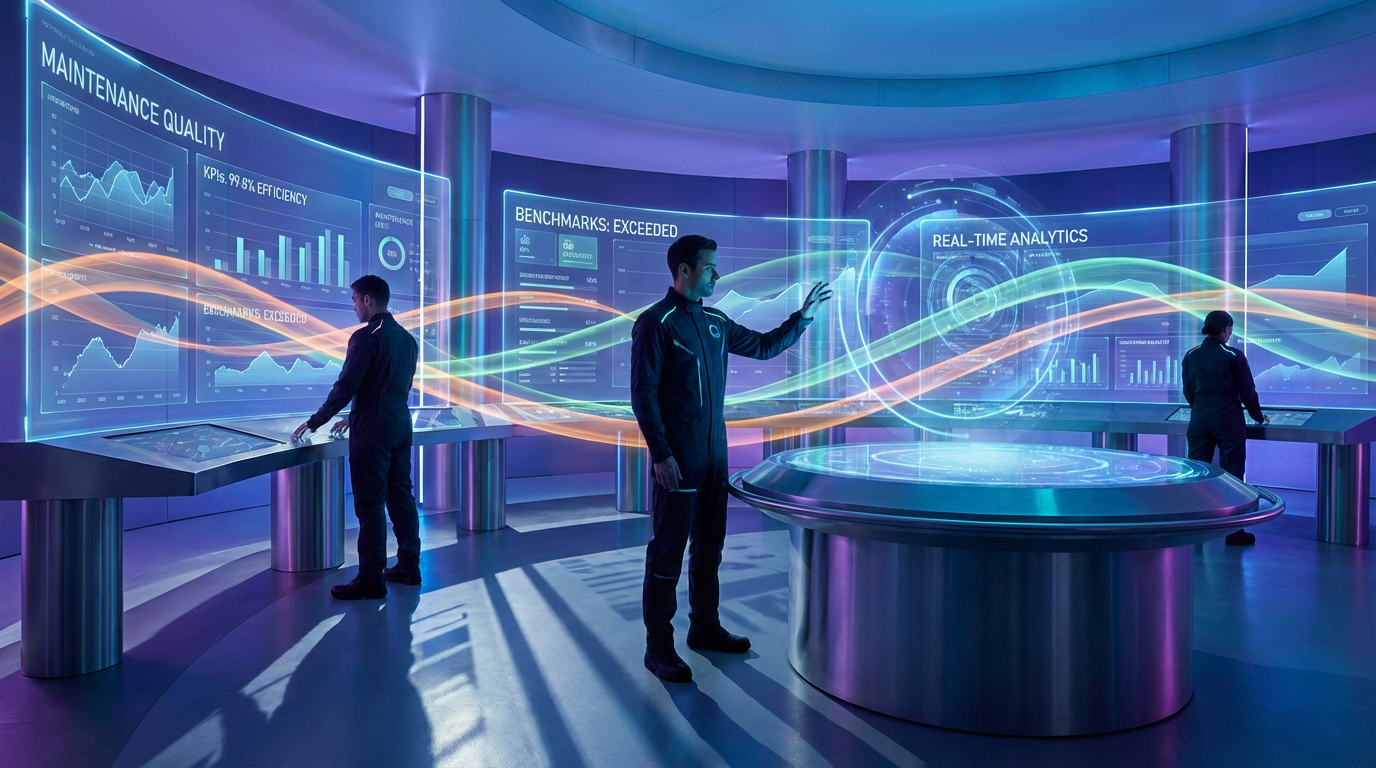
Maintenance quality, benchmark and KPI's
$1500.00
Maintenance Quality, Benchmark and KPIs: 5-Day Professional Training Course
Course Overview
This comprehensive Maintenance Quality and KPI Training provides systematic methodologies for measuring, benchmarking, and improving maintenance performance. This intensive 5-day program covers maintenance quality fundamentals, key performance indicators (KPIs), world-class benchmarking, data collection and analysis, dashboard development, continuous improvement strategies, and best practices for maintenance excellence in manufacturing, facilities, and asset-intensive industries.
Who Should Attend This Maintenance Metrics Course?
Maintenance Managers optimizing department performance
Reliability Engineers tracking asset performance
Plant Managers improving operational excellence
CMMS Administrators managing maintenance data
Continuous Improvement Specialists in maintenance
Operations Managers coordinating production and maintenance
Asset Management Professionals measuring asset health
Maintenance Planners and Schedulers optimizing workflows
Quality Engineers in maintenance operations
Course Objectives
Participants will master maintenance performance measurement, KPI selection and calculation, benchmarking methodologies, Overall Equipment Effectiveness (OEE), Mean Time Between Failures (MTBF), maintenance cost analysis, dashboard development, data-driven decision making, and implementing continuous improvement in maintenance operations.
Day 1: Maintenance Quality Fundamentals and Framework
Morning Session: Introduction to Maintenance Quality
Topics Covered:
Maintenance quality definition and importance
Evolution of maintenance: reactive to predictive to prescriptive
Maintenance strategy alignment with business objectives
World-class maintenance characteristics
Total Productive Maintenance (TPM) principles
Reliability-Centered Maintenance (RCM) overview
Maintenance excellence framework
Industry best practices and standards
Maintenance Strategy Types:
Reactive (run-to-failure) maintenance
Preventive maintenance (time-based)
Predictive maintenance (condition-based)
Proactive maintenance (root cause elimination)
Reliability-centered approach
Afternoon Session: Maintenance Performance Framework
Topics Covered:
Balanced Scorecard approach for maintenance
Strategic vs. tactical vs. operational KPIs
Leading vs. lagging indicators
Four perspectives: financial, customer, internal process, learning/growth
Performance measurement hierarchy
Aligning KPIs with organizational goals
Data quality and availability requirements
CMMS/EAM system role in measurement
Framework Components:
Asset performance metrics
Cost and financial metrics
Workforce productivity metrics
Process efficiency metrics
Safety and environmental metrics
Quality and reliability metrics
Workshop:
Mapping current maintenance metrics to balanced scorecard framework.
Day 2: Essential Maintenance KPIs and Calculations
Morning Session: Equipment Performance KPIs
Topics Covered:
Overall Equipment Effectiveness (OEE) calculation
OEE components: Availability × Performance × Quality
Availability loss: downtime and breakdowns
Performance loss: speed reduction and minor stops
Quality loss: defects and rework
OEE world-class benchmarks (85%+)
Mean Time Between Failures (MTBF)
Mean Time To Repair (MTTR)
Mean Time To Failure (MTTF)
Equipment uptime and downtime tracking
Reliability Metrics:
Asset reliability index
Failure rate calculations
Survival analysis and reliability curves
Planned vs. unplanned downtime ratio
Emergency maintenance percentage
Afternoon Session: Maintenance Cost and Financial KPIs
Topics Covered:
Maintenance cost as percentage of RAV (Replacement Asset Value)
Maintenance cost per unit produced
Direct vs. indirect maintenance costs
Labor cost tracking and analysis
Parts and materials cost metrics
Contractor and outsourcing costs
Maintenance budget variance analysis
Return on Maintenance Investment (ROMI)
Life-cycle cost analysis
Total Cost of Ownership (TCO)
Cost Breakdown:
Preventive maintenance costs
Corrective maintenance costs
Predictive maintenance program costs
Administrative and overhead allocation
Energy costs related to equipment efficiency
Practical Exercise:
Calculating OEE, MTBF, MTTR, and maintenance cost KPIs using sample data.
Day 3: Workforce and Process KPIs
Morning Session: Maintenance Workforce Metrics
Topics Covered:
Maintenance labor productivity measurement
Wrench time (productive time) analysis
Craft utilization rates
Schedule compliance percentage
Work order completion rate
Backlog management metrics: ready backlog vs. total backlog
Overtime percentage and trends
Training hours per technician
Skill level assessment and competency gaps
Absenteeism and turnover rates
Workforce Efficiency:
Planned vs. unplanned work ratio (target: 80/20)
Reactive maintenance percentage (target: <20%)
PM compliance rate (target: >90%)
Work order closure time
Rework percentage
Afternoon Session: Maintenance Process KPIs
Topics Covered:
Planning and scheduling effectiveness
Schedule attainment and adherence
Job plan quality metrics
Parts availability for planned work
Preventive maintenance (PM) effectiveness
PM task completion percentage
PM optimization: right tasks, right frequency
Work order data quality
Estimated vs. actual time variance
Emergency work order percentage (target: <10%)
Process Maturity Indicators:
CMMS data completeness and accuracy
Standard job plan library coverage
Bill of materials (BOM) accuracy
Equipment history completeness
Failure code standardization
Case Study:
Analyzing maintenance process efficiency and identifying improvement opportunities.
Day 4: Benchmarking and Data Analysis
Morning Session: Maintenance Benchmarking
Topics Covered:
Benchmarking fundamentals and types
Internal benchmarking across facilities
Competitive benchmarking within industry
Functional benchmarking across industries
Best-in-class benchmarking
Industry standards and databases: SMRP, ISEMP, NREL
World-class maintenance performance levels
Benchmarking process: plan, collect, analyze, adapt, improve
Key Benchmark Metrics:
OEE industry comparisons by sector
Maintenance cost per unit output
MTBF by equipment type
Wrench time standards (target: 55%+)
PM/CM ratio (target: 80/20)
Maintenance staff per production employee
Afternoon Session: Data Collection and Analysis
Topics Covered:
Data collection methodologies and sources
CMMS/EAM data extraction and cleansing
Manual data collection: time studies, observations
Automated data capture: sensors, IoT, SCADA
Data quality assessment and improvement
Statistical analysis fundamentals for maintenance
Trend analysis and pattern recognition
Pareto analysis for failure modes
Correlation analysis: maintenance actions vs. reliability
Predictive analytics and forecasting
Data Visualization:
Charts and graphs for maintenance metrics
Heat maps for equipment criticality
Trend lines and control charts
Waterfall charts for cost breakdown
Hands-On Lab:
Using Excel/Power BI for maintenance data analysis and visualization.
Day 5: Dashboards, Reporting, and Continuous Improvement
Morning Session: Maintenance Dashboard Development
Topics Covered:
Dashboard design principles and best practices
Audience-specific dashboards: executive, manager, technician
Visual design: colors, gauges, indicators
Key metrics display and hierarchy
Real-time vs. periodic reporting
Mobile dashboard accessibility
Software tools: Power BI, Tableau, Excel, CMMS native dashboards
Interactive features and drill-down capabilities
Alert thresholds and notifications
Dashboard maintenance and updates
Dashboard Levels:
Strategic dashboard: high-level trends, financial impact
Tactical dashboard: departmental performance, KPI tracking
Operational dashboard: daily work management, resource allocation
Afternoon Session: Continuous Improvement in Maintenance
Topics Covered:
Using KPIs to drive improvement
Setting SMART goals and targets
Gap analysis: current vs. desired performance
Root cause analysis for poor performance
Action planning and implementation
Change management in maintenance organizations
Lean maintenance principles
Quick wins vs. long-term initiatives
Sustaining improvements and preventing backsliding
Performance review meetings and cadence
Improvement Strategies:
Eliminating chronic equipment failures
Reducing emergency maintenance
Improving PM program effectiveness
Optimizing spare parts inventory
Enhancing planning and scheduling
Implementing predictive maintenance technologies
Developing workforce skills and capabilities
Best Practices:
Regular KPI review cycles (daily, weekly, monthly)
Transparent communication of results
Recognition and rewards for performance
Benchmarking against past performance and peers
Technology adoption: CMMS, condition monitoring, mobile tools
Cross-functional collaboration with operations
Standard work and procedures
Knowledge management and lessons learned
Implementation Planning
Topics Covered:
KPI implementation roadmap
Stakeholder engagement and buy-in
Data infrastructure requirements
CMMS configuration for KPI tracking
Training and communication plans
Pilot programs and phased rollout
Success metrics for KPI program itself
Common pitfalls and how to avoid them
Sustainability:
Governance structure for KPI management
Regular calibration and validation
KPI evolution as organization matures
Avoiding metric overload (5-7 key metrics focus)
Linking KPIs to individual performance
Final Project and Assessment
Comprehensive Maintenance Metrics Project:
Develop complete KPI program including:
Current state assessment and gap analysis
KPI selection based on strategic priorities
Calculation methodologies and data sources
Target setting using benchmarks
Dashboard design mockups
Data collection plan
Implementation roadmap with milestones
Continuous improvement process
Executive presentation of KPI strategy
Assessment Activities:
Written examination on maintenance KPIs and benchmarking
Practical calculation exercises: OEE, MTBF, cost metrics
Dashboard design project evaluation
Data analysis case study
Group presentation: maintenance performance improvement plan
Certificate of Professional Training in Maintenance Quality, Benchmark and KPIs
Course Benefits and Learning Outcomes
Participants will select appropriate maintenance KPIs, calculate OEE and reliability metrics, benchmark against industry standards, analyze maintenance data, create effective dashboards, implement data-driven improvements, develop performance reports, and establish continuous improvement processes.
Training Methodology
Instructor-led sessions with hands-on calculation exercises, data analysis workshops, dashboard design projects, real industry benchmarking data, CMMS demonstrations, case studies from multiple industries, and project-based learning.
Course Materials
Comprehensive maintenance metrics handbook, KPI calculation templates, Excel analysis tools, dashboard design guidelines, benchmarking databases access, industry standards summary, implementation checklists, and professional certificate.
Software and Tools
Hands-on practice with Excel for calculations and charts, Power BI or Tableau for dashboards, CMMS system demonstrations, statistical analysis tools, and maintenance KPI calculators.
Prerequisites
Experience in maintenance operations or management, basic understanding of CMMS systems, fundamental math and statistics knowledge, familiarity with Excel helpful, and no prior KPI training required.
Keywords: maintenance KPIs, maintenance quality, maintenance benchmarking, Overall Equipment Effectiveness OEE, MTBF MTTR metrics, maintenance performance measurement, maintenance dashboard, reliability metrics, maintenance cost analysis, world-class maintenance, TPM metrics, wrench time, schedule compliance, maintenance productivity, planned maintenance percentage, maintenance excellence, asset performance indicators, CMMS metrics, maintenance continuous improvement, maintenance reporting