Integrity Management of Subsea Pipelines
$3500.00
🌊 Integrity Management of Subsea Pipelines: 5-Day Course Outline
Duration: 5 Days | 4 Hours Daily | 20 Total Hours
Level: Intermediate to Advanced
🎯 Course Overview
Comprehensive training on subsea pipeline integrity management covering inspection, corrosion control, risk assessment, and maintenance strategies aligned with API, DNV, and NORSOK standards.
Target Audience: Pipeline integrity engineers, subsea engineers, corrosion specialists, asset managers, operations engineers
Prerequisites: Engineering degree, 2+ years oil & gas experience
📅 DAY 1: Fundamentals & Integrity Threats
Learning Objectives: Understand subsea pipeline systems, identify integrity threats, and comprehend regulatory requirements
Modules:
1.1 Subsea Pipeline Systems
Pipeline types, materials, and coating systems
Design considerations and installation methods
Industry overview and major projects
1.2 Integrity Threats & Failure Mechanisms
External threats (corrosion, third-party damage, free spans)
Internal threats (CO₂/H₂S corrosion, MIC, erosion)
Manufacturing defects and time-dependent degradation
Historical failure analysis
1.3 Regulatory Standards
API 1160, 1163 | ASME B31.4, B31.8
DNV-ST-F101, DNV-RP-F101, DNV-RP-F106
NORSOK Y-002, M-001, M-506
ISO 13623, 16708 | NACE/AMPP standards
1.4 Pipeline Integrity Management System (PIMS)
PIMS structure and components
Data management and KPIs
Management of change procedures
Deliverable: Integrity threat register and PIMS framework
📅 DAY 2: Corrosion Management & Cathodic Protection
Learning Objectives: Master corrosion mechanisms, design CP systems, and implement corrosion control strategies
Modules:
2.1 Corrosion Mechanisms
Electrochemical principles in seawater
CO₂, H₂S, MIC, pitting, crevice corrosion
Environmental factors and corrosion rates
2.2 Internal Corrosion Control
Risk assessment (NORSOK M-506, DNV-RP-F106)
Chemical injection (inhibitors, biocides)
Pigging strategies and monitoring
2.3 External Corrosion & Coatings
Coating types (FBE, 3LPE, concrete)
Selection criteria and inspection
Thermal insulation systems
2.4 Cathodic Protection Design
Sacrificial anode systems (DNV-RP-F103)
ICCP systems and applications
CP monitoring and surveys
Exercise: CP design calculations
2.5 Materials Selection
Carbon steel grades (API 5L, X42-X80)
CRA options (13Cr, duplex, nickel alloys)
Qualification testing
Deliverable: Corrosion management strategy with CP design
📅 DAY 3: Inspection & Condition Assessment
Learning Objectives: Select inspection methods, interpret ILI data, and conduct fitness-for-service assessments
Modules:
3.1 Risk-Based Inspection Strategy
RBI methodology and optimization
Inspection frequency determination
Cost-benefit analysis
3.2 In-Line Inspection (ILI) Technologies
MFL, UT, caliper, IMU tools
Tool selection and capabilities
Pipeline preparation and run requirements
3.3 ILI Data Interpretation
Feature identification and sizing
Metal loss, dents, crack assessment
POI/POD and uncertainty management
Growth rate analysis
Lab: ILI report analysis exercise
3.4 External Inspection
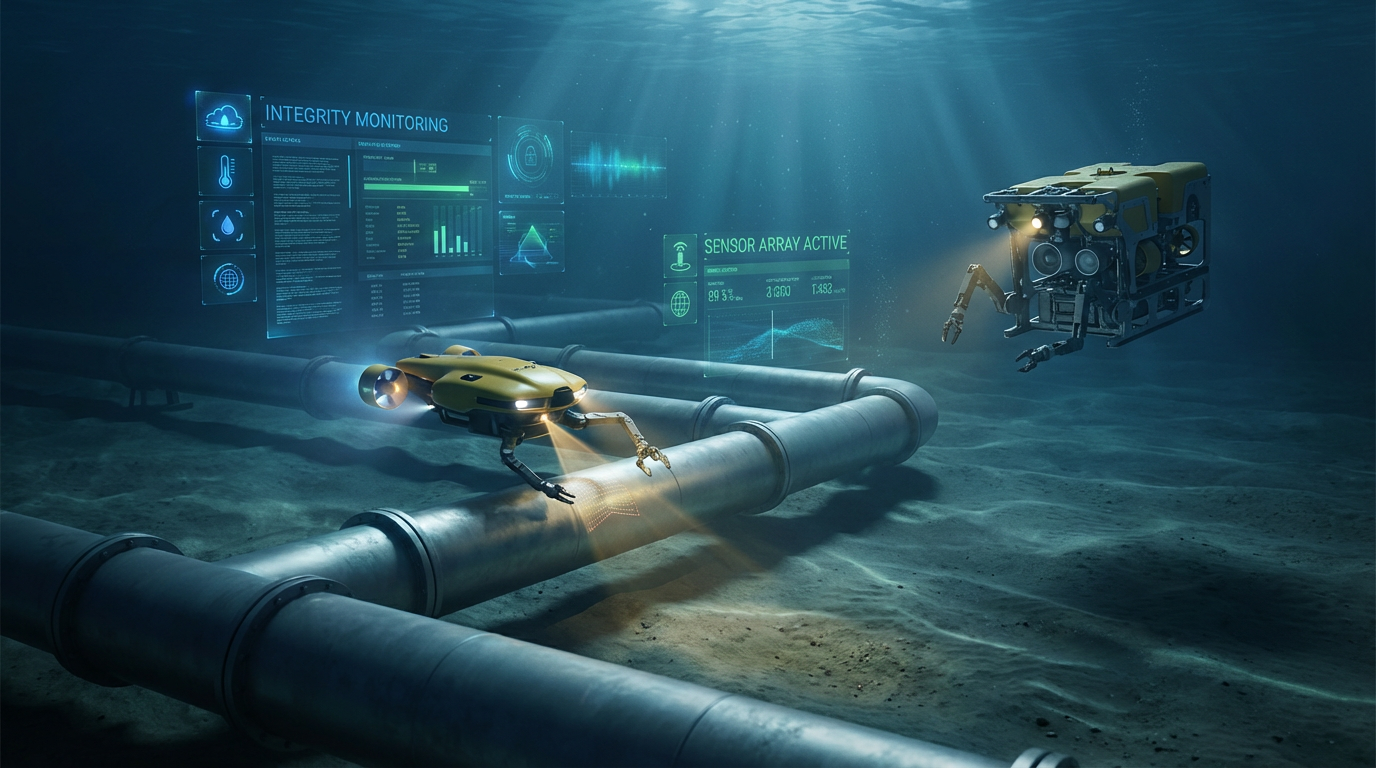
ROV inspections (visual, CP, UT, free spans)
AUV and diver inspections
Survey frequency and documentation
3.5 NDT Methods
UT, RT, MT, PT techniques
Personnel certification requirements
3.6 Fitness-For-Service Assessment
ASME B31G and DNV-RP-F101 methods
Remaining strength calculations
Crack and dent assessment (API 579, BS 7910)
Workshop: FFS calculations
Deliverable: Inspection program and FFS assessment report
📅 DAY 4: Risk Assessment & Operating Windows
Learning Objectives: Conduct risk assessments, define integrity operating windows, and manage emergency response
Modules:
4.1 Risk Assessment Methods
HAZID, HAZOP, FMEA, bow-tie analysis
Qualitative vs. quantitative approaches
Risk matrices and ALARP principle
4.2 Quantitative Risk Assessment
Probability of Failure (PoF) assessment
Consequence of Failure (CoF) analysis
Risk calculation and software tools
Case Study: Pipeline risk assessment
4.3 Risk-Based Integrity Management
RBI optimization and repair prioritization
Direct assessment (ECDA, ICDA, SCCDA)
Dynamic risk updating
4.4 Integrity Operating Windows (IOW)
Operating envelope development
Pressure, temperature, flow, chemical limits
IOW monitoring and excursion management
Workshop: IOW development exercise
4.5 Flow Assurance Integration
Hydrates, wax, scale, sand management
Impact on integrity (erosion, under-deposit corrosion)
Shutdown/startup considerations
4.6 Leak Detection & Emergency Response
CPM, RTTM, acoustic, fiber optic systems
Emergency response plans
Oil spill response procedures
Exercise: Emergency scenario simulation
Deliverable: Risk assessment report, IOW documentation, ERP framework
📅 DAY 5: Maintenance, Repair & Capstone Project
Learning Objectives: Plan maintenance programs, select repair methods, evaluate life extension, and complete comprehensive project
Modules:
5.1 Maintenance Strategies
Preventive, predictive, risk-based maintenance
Pigging programs and procedures
Maintenance optimization
5.2 Repair Technologies
Mechanical clamps, composite wraps
Hot tapping and hyperbaric welding
Repair selection and qualification
Case Study: Major repair operations
5.3 Life Extension & Decommissioning
Remaining life calculations
Re-qualification for changed conditions
Decommissioning options and regulations
Late-life integrity management
5.4 Advanced Technologies
Digital twins and AI/ML applications
Fiber optic sensing (DFOS)
Autonomous inspection (AUVs, robotics)
5.5 Capstone Project Develop complete integrity management program including:
Asset description and threat assessment
Risk and corrosion management strategies
Inspection and maintenance programs
IOW and emergency response plans
KPIs and budget estimates
Team Presentation: 20 minutes + Q&A
5.6 Course Summary
Key takeaways and industry trends
Professional certifications (NACE, API, ASNT)
Continued learning resources
Deliverable: Complete integrity management plan and presentation
🛠️ Standards & Tools Covered
Standards: API 1160/1163/579 | ASME B31G/B31.4/B31.8 | DNV-ST-F101/RP-F101/RP-F103/RP-F106 | NORSOK M-001/M-506/Y-002 | ISO 13623/16708 | BS 7910
Software: PIMS platforms, ILI analysis tools, risk assessment software, FFS calculators, CP design tools
Technologies: MFL/UT/Caliper ILI tools, ROV/AUV systems, NDT equipment, leak detection systems
📚 Course Materials
Technical manual (400+ pages)
Standards reference guide
20+ case studies
Excel calculation tools
Templates and checklists
ILI sample reports
Certificate (40 PDH / 4.0 CEU)
60-day technical support
🎓 Learning Outcomes
✅ Develop comprehensive PIMS programs
✅ Design corrosion control and CP systems
✅ Plan risk-based inspection programs
✅ Interpret ILI data and conduct FFS assessments
✅ Perform quantitative risk assessments
✅ Define integrity operating windows
✅ Select repair and maintenance strategies
✅ Manage emergency response
✅ Evaluate life extension options