Instrumentation, Automation & Process Control
$5500.00
Instrumentation, Automation & Process Control: Advanced 5-Day Training Course
Course Overview
This comprehensive Instrumentation, Automation and Process Control training program delivers cutting-edge knowledge for industrial professionals across the Kingdom of Saudi Arabia (KSA), Oman, GCC countries (UAE, Qatar, Kuwait, Bahrain), and Africa. The course covers modern instrumentation technologies, advanced process control systems, industrial automation, and digital transformation strategies essential for optimizing operations in oil & gas, petrochemical, power generation, water treatment, and manufacturing sectors.
As the Middle East and Africa embrace Industry 4.0, smart manufacturing, and digital oilfields, this training addresses critical competency requirements for engineers working with Saudi Aramco, SABIC, PDO (Petroleum Development Oman), ADNOC, Ma’aden, OQ, Sasol, and other major industrial operators implementing advanced automation and control systems across their facilities.
Target Audience
Instrumentation Engineers in oil, gas, petrochemical facilities across GCC and Africa
Control Systems Engineers managing DCS, PLC, SCADA systems
Automation Specialists implementing Industry 4.0 solutions
Process Engineers optimizing plant operations in Saudi Arabia, Oman, UAE
Maintenance Engineers responsible for instrumentation reliability
Project Engineers designing control systems for new facilities
Technical Managers overseeing automation upgrades and digital transformation
Operations Personnel interfacing with advanced control systems
Day 1: Industrial Instrumentation Fundamentals
Morning Session: Process Measurement Principles
Measurement fundamentals: accuracy, precision, rangeability, repeatability
Sensor and transmitter technologies for harsh environments (high temperature in GCC region)
Pressure measurement: differential, absolute, gauge pressure transmitters
Smart transmitters with HART, Foundation Fieldbus, Profibus protocols
Temperature measurement: thermocouples, RTDs, infrared sensors
Calibration procedures and standards compliance (SASO, ISO)
Installation best practices for desert and tropical climates (KSA, Oman, Africa)
Afternoon Session: Flow, Level & Analytical Measurements
Flow measurement technologies: orifice plates, venturi, magnetic, ultrasonic, Coriolis
Custody transfer metering in oil & gas operations across Saudi Arabia and Oman
Level measurement: radar, ultrasonic, guided wave radar, differential pressure
Tank gauging systems for refineries and storage terminals
Analytical instrumentation: gas chromatography, pH, conductivity, dissolved oxygen
Vibration monitoring and machinery protection systems
Practical exercises: Instrument selection for GCC and African applications
Day 2: Control Valves & Final Control Elements
Morning Session: Control Valve Technology
Control valve sizing and selection methodologies
Valve characteristics: linear, equal percentage, quick opening
Actuator types: pneumatic, electric, hydraulic systems
Positioners and digital valve controllers with diagnostics
Cavitation and flashing prevention in hot climate operations
Noise reduction and anti-surge valve applications
Material selection for corrosive and high-temperature services (petrochemical plants)
Afternoon Session: Advanced Final Control Elements
Variable speed drives (VFDs) for pump and compressor control
Smart positioners with partial stroke testing (PST) capabilities
Emergency shutdown valves (ESD) and safety instrumented systems (SIS)
On-off valves: ball, gate, butterfly, globe valves
Control valve maintenance and troubleshooting strategies
Performance diagnostics and predictive maintenance
Case studies: Major projects in Jubail (KSA), Sohar (Oman), Ruwais (UAE)
Day 3: Distributed Control Systems (DCS) & PLCs
Morning Session: DCS Architecture & Operations
DCS fundamentals: architecture, hardware, software components
Major DCS platforms: Honeywell Experion, Emerson DeltaV, Yokogawa CENTUM, ABB 800xA
Controller configuration and programming basics
Input/Output (I/O) systems and fieldbus integration
Operator interface design: HMI best practices for Saudi Aramco and PDO standards
Alarm management and rationalization (ISA 18.2 standards)
Hands-on exercises: DCS configuration and graphics development
Afternoon Session: Programmable Logic Controllers (PLCs)
PLC architecture: Siemens S7, Allen-Bradley ControlLogix, Schneider Modicon
Ladder logic programming fundamentals
Function block diagrams and structured text programming
PLC vs. DCS application selection criteria
Industrial networks: Ethernet/IP, Profinet, Modbus TCP/IP
Integration with DCS and SCADA systems
Practical workshop: PLC programming for typical process applications
Day 4: SCADA Systems & Advanced Process Control
Morning Session: SCADA & Industrial Networks
SCADA system architecture for pipeline and remote facilities
Remote terminal units (RTUs) and communication protocols
Wireless instrumentation and IIoT (Industrial Internet of Things) devices
Cybersecurity for industrial control systems critical for GCC infrastructure
OPC UA standards and data integration
Cloud-based monitoring solutions for distributed assets in Africa
Regional applications: Pipeline monitoring across Saudi Arabia, Oman oil fields, African mining
Afternoon Session: Advanced Process Control (APC)
Model Predictive Control (MPC) principles and applications
Multivariable control strategies for complex processes
APC implementation in refineries and petrochemical plants (SABIC, Aramco)
Cascade, feedforward, and ratio control strategies
PID tuning techniques: Ziegler-Nichols, Cohen-Coon, lambda tuning
Control loop performance monitoring and optimization
Economic benefits: APC case studies from GCC refineries and gas plants
Soft sensors and inferential control for unmeasured variables
Day 5: Safety Systems & Digital Transformation
Morning Session: Safety Instrumented Systems (SIS)
Functional safety standards: IEC 61508, IEC 61511
Safety Integrity Level (SIL) determination and verification
SIS architecture: logic solvers, input/output devices, final elements
Emergency shutdown (ESD) and fire & gas (F&G) system design
Proof testing and maintenance of safety systems
Common cause failures and redundancy strategies
Compliance requirements: Saudi Aramco SAEP, PDO standards, ADNOC specifications
Lessons learned from incidents in Middle East and African facilities
Afternoon Session: Industry 4.0 & Digital Technologies
Digital transformation in oil & gas and industrial sectors across GCC
Industrial IoT sensors and edge computing applications
Big data analytics for process optimization
Artificial intelligence and machine learning in process control
Digital twin technology for plant simulation and optimization
Augmented reality (AR) for maintenance and operator training
Smart instrumentation with self-diagnostics and predictive capabilities
Wireless sensor networks and asset performance management (APM)
Future trends: Autonomous operations, robotics in hazardous environments
Vision 2030 alignment: Smart factory initiatives in Saudi Arabia and GCC
Learning Outcomes
Upon completion, participants will:
Design and specify instrumentation systems for industrial applications in Middle East and Africa
Configure and program DCS and PLC systems for process automation
Implement advanced process control strategies for operational optimization
Apply functional safety principles to safety instrumented systems
Troubleshoot and optimize control loops for enhanced performance
Evaluate emerging technologies for digital transformation initiatives
Ensure cybersecurity compliance in industrial automation environments
Reduce operational costs and improve plant reliability through predictive maintenance
Course Delivery & Certification
Format: Interactive lectures, simulation software training, hands-on labs, real-world case studies
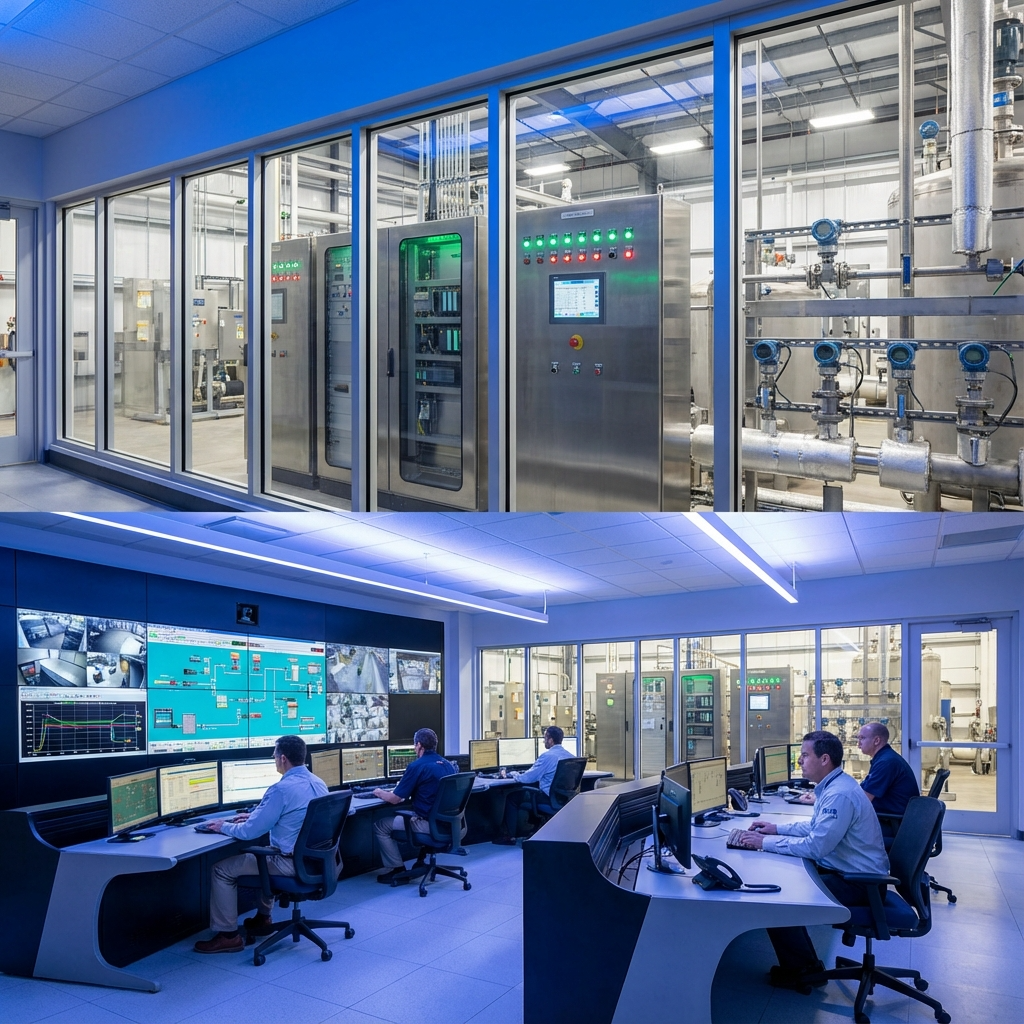
Facilities: State-of-the-art training labs with DCS/PLC simulators and instrumentation equipment
Materials: Comprehensive technical manual, software tools, reference standards
Certification: Professional certificate recognized by major employers across KSA, Oman, UAE, Qatar, and Africa
Language: English (Arabic translation available)
CPD Points: Eligible for continuing professional development credits
Locations: Riyadh, Jeddah, Dammam, Al-Khobar (KSA), Muscat (Oman), Dubai, Abu Dhabi, Doha, and major African industrial cities
Why This Course is Critical for the Region
The GCC and African industrial sectors are investing billions in automation upgrades, smart manufacturing, and digital transformation. Saudi Arabia’s Vision 2030 emphasizes industrial diversification and technology adoption. Oman’s Vision 2040 focuses on advanced manufacturing. Major projects like NEOM, Duqm Refinery, Ruwais petrochemical expansion, and African mining automation require professionals skilled in modern instrumentation and control technologies.
This training provides practical, hands-on expertise directly applicable to regional projects, incorporating international standards while addressing specific challenges of operating in desert climates, remote locations, and high-temperature environments characteristic of Middle East and African industrial operations.
Master automation. Drive efficiency. Lead digital transformation.