
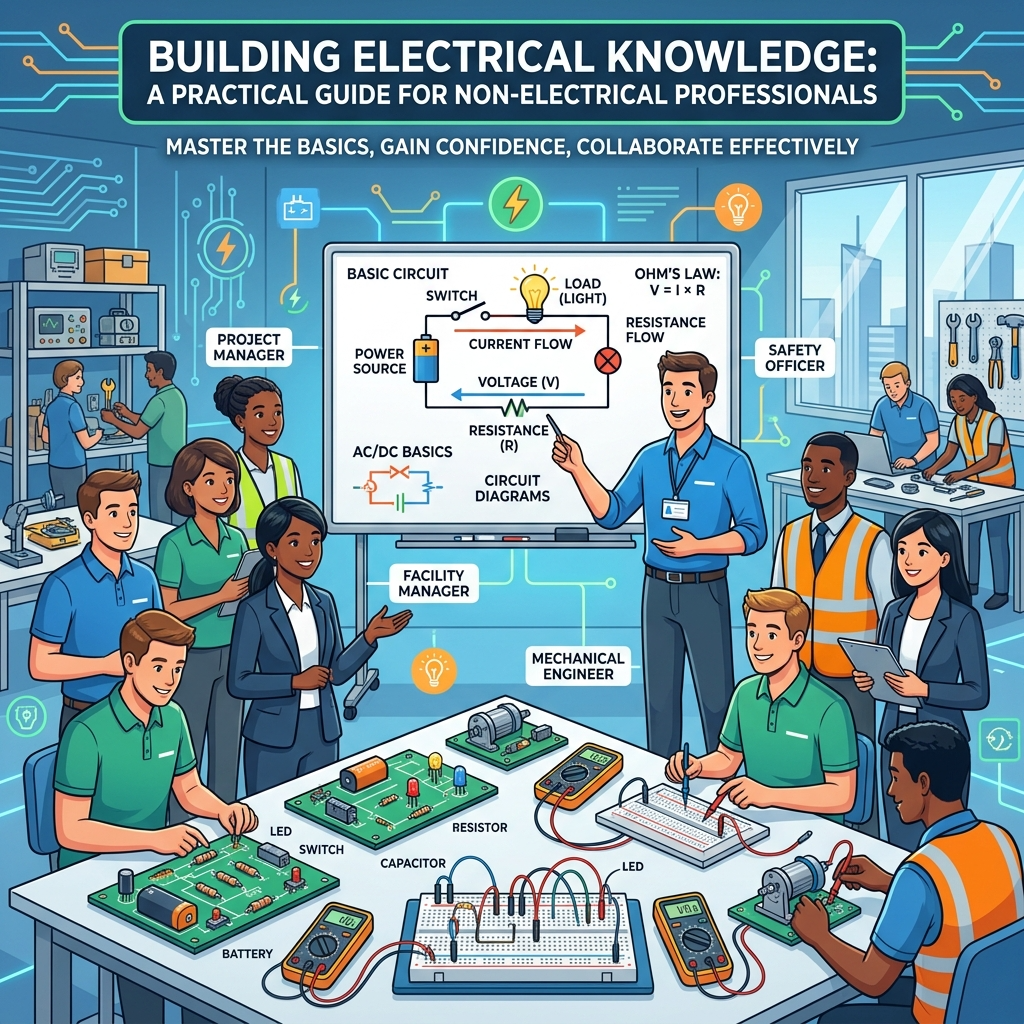
Electrical Engineering for Non-Electrical Professionals
$5500.00
Electrical Engineering for Non-Electrical Professionals: 5-Day Practical Awareness Course
Course Overview
This comprehensive 5-day course demystifies electrical engineering fundamentals for facility managers, project managers, HSE professionals, construction supervisors, and non-technical professionals working in KSA, GCC nations, and African regions. Designed specifically for non-engineers and non-electricians who work around electrical systems, the curriculum provides essential electrical knowledge, safety awareness, system operations understanding, and practical design concepts. The program covers basic electrical theory, power systems fundamentals, electrical safety hazards including arc flash awareness, circuit protection, control systems, and maintenance coordination. Participants gain competency aligned with UAE electrical safety compliance requirements, GCC industrial standards, Saudi Arabia electrical code requirements, and African electrical infrastructure management. The course integrates 2025-2026 mandatory safety training requirements across the region, ensuring compliance with strict electrical safety regulations while building confidence in technical decision-making and communication with electrical professionals.
Day 1: Electrical Fundamentals & Core Concepts
Topics Covered:
This foundational day establishes comprehensive understanding of electrical engineering basics tailored for non-technical professionals. Participants master essential electrical terms including voltage, current, resistance, and power, understanding their practical implications in workplace environments. The curriculum covers the relationship between electricity and magnetism, AC versus DC systems, and single-phase versus three-phase power systems critical in industrial and commercial facilities across target regions. Delegates learn electrical circuit basics, series and parallel configurations, circuit calculations, and fundamental safety principles. The module introduces electrical distribution systems from utility supply through facility systems, explaining transformers, switchgear, distribution panels, and circuit breakers in non-technical language. Topics address how electrical systems deliver power to different building sections, understanding load requirements, and capacity limitations. Practical applications include recognizing electrical symbols on drawings, interpreting single-line diagrams, and understanding equipment nameplate information. The day covers electrical properties of materials, conductor and insulator concepts, and grounding principles essential for workplace safety. Real-world examples illustrate electrical concepts using familiar devices and facility equipment. Advanced content addresses how extreme GCC temperatures affect electrical system behavior, material properties, and equipment longevity—critical for facility managers operating in harsh environmental conditions. Interactive exercises develop basic electrical literacy enabling professional communication with engineers and electricians.
Day 2: Electrical Safety, Hazards & Risk Awareness
Topics Covered:
This specialized day focuses on comprehensive electrical safety awareness, hazard recognition, and risk mitigation strategies critical for non-technical professionals. Participants master electrical shock hazards, understanding voltage thresholds, current effects on human physiology, and path of electricity through the body. The curriculum covers arc flash hazards—a major concern in GCC’s high-temperature industrial environments where equipment failure rates increase—including thermal burns, blast pressure, and eye injuries. Delegates learn electrical shock prevention strategies, hazard assessment approaches, and safe work practices. The module addresses lockout/tagout (LOTO) procedures, confined space electrical hazards, and wet/corrosive environment considerations relevant to Middle Eastern and African industrial facilities. Topics include personal protective equipment (PPE) requirements, injury prevention protocols, and emergency response procedures. Advanced safety content covers NFPA 70 (National Electrical Code) principles ensuring safe electrical design in GCC industrial compliance landscapes. The day includes accident case studies, incident investigation procedures, and lessons learned from electrical failures. Participants develop facility-specific electrical safety policies, hazard identification checklists, and worker awareness programs. Topics address communication with electricians regarding safety concerns, understanding electrical accident investigation, and driving safety culture in organizations. By 2026, electrical safety training is mandatory and high-priority across UAE, GCC nations, and global markets per evolving safety regulations. Interactive workshops develop hazard recognition capabilities and confidence in addressing electrical safety issues.
Day 3: Electrical Systems, Equipment & Facility Operations
Topics Covered:
Comprehensive exploration of electrical systems in buildings and industrial facilities, equipment functions, and operational procedures. Participants understand power generation options including traditional generators and renewable energy systems (solar PV) increasingly prevalent across KSA and GCC facilities. The curriculum covers power distribution architecture, feeder systems, motor control centers (MCCs), and control systems used in facilities. Delegates learn about different equipment types including motors, pumps, compressors, HVAC systems, lighting, and specialized industrial machinery. The module addresses electrical loads, demand management, power factor correction, and energy efficiency concepts important for facility management. Topics include preventive maintenance scheduling, condition monitoring approaches, and coordination with maintenance technicians. Advanced content covers smart building electrical systems, IoT-enabled equipment monitoring, and predictive maintenance technologies transforming facility operations. Participants explore electrical systems in data centers, industrial plants, commercial buildings, and renewable energy installations typical across target regions. The day includes facility tours (virtual or actual), equipment demonstrations, and hands-on experience with electrical control systems. Advanced modules address electrical system documentation, technical drawings interpretation, and communication with electrical service providers. Case studies highlight successful facility electrical management, efficiency improvements, and cost reduction strategies. Strategic content addresses business implications of electrical system reliability, power quality, and continuous operation requirements.
Day 4: Electrical Design Concepts, Codes & Practical Application
Topics Covered:
This specialized day addresses electrical design fundamentals, applicable codes and standards, and practical applications for non-technical decision-makers. Participants learn basic electrical design concepts meeting industrial and commercial facility demands per Saudi Arabia electrical code requirements and GCC standards. The curriculum covers load calculations, circuit design principles, voltage drop analysis, and protection device coordination in accessible language. Delegates understand electrical code compliance basics including SASO (Saudi Arabian Standards Organization) requirements, SERA technical codes, and international standards adopted across regions. The module addresses design considerations for different facility types, geographic challenges in extreme climates, and sustainability integration. Topics include renewable energy system basics, smart grid concepts, and efficiency measures applicable to modern facilities. Participants explore cost-benefit analysis for electrical upgrades, technology selection criteria, and investment justification frameworks. Advanced content covers electrical system resilience, backup power systems, uninterruptible power supplies (UPS), and business continuity planning. The day addresses communication with design engineers, understanding design proposals, and evaluating technical recommendations. Practical exercises involve interpreting electrical drawings, identifying design elements, and discussing design choices with professionals. Case studies highlight design decisions in diverse facilities—hospitals, data centers, manufacturing plants, and commercial complexes across KSA, GCC, and Africa.
Day 5: Professional Development, Leadership & Strategic Management
Topics Covered:
The final day focuses on professional development, leadership capabilities, and strategic management of electrical functions for non-technical professionals. Participants examine career pathways, continuing education opportunities, and professional certifications valuable for facility managers and HSE professionals. The curriculum covers facility management training recognized across UAE and international markets, professional qualifications for project managers, and specialized certifications in electrical safety and compliance. Delegates explore emerging career opportunities in renewable energy management, smart building operations, and electrical systems automation. The module addresses team leadership, electrical technician supervision, and building effective relationships with electrical contractors and service providers. Topics include project management for electrical infrastructure projects, procurement processes, vendor management, and contract administration. Advanced modules address business decision-making regarding electrical system investments, return-on-investment (ROI) analysis, and strategic planning for facility modernization. Participants develop facility-specific strategies for electrical management, risk reduction, and compliance assurance. The day covers regulatory compliance frameworks, documentation requirements, and audit preparation procedures. The capstone project involves developing comprehensive electrical management plans for assigned facility types, incorporating safety protocols, maintenance strategies, and strategic improvements. Discussion includes emerging trends in electrical technology, digital transformation impacts, and future skills requirements for non-technical professionals managing electrical operations. Strategic content addresses career advancement from facility management into specialized electrical systems roles, energy management positions, and infrastructure leadership.
Course Benefits & Key Outcomes
Participants gain practical electrical knowledge enabling informed decision-making and effective communication with electrical professionals. They develop electrical safety awareness and hazard recognition capabilities required for 2026 GCC and African workplaces. Delegates understand facility electrical systems, basic design principles, and maintenance coordination. Certificate of completion demonstrates recognized competency valued across facility management, construction, HSE, and project management careers.
Target Audience
Facility managers, project managers, HSE professionals, construction supervisors, operations directors, building managers, maintenance coordinators, and non-technical professionals working in KSA, UAE, Qatar, Kuwait, Saudi Arabia, and African nations.
Prerequisites
High school education or equivalent; no electrical background required; enthusiasm for learning technical concepts essential.
Key Learning Features:
Non-technical language and practical examples, facility-specific case studies, interactive discussions with electrical professionals, hands-on equipment demonstrations, and decision-making frameworks for non-engineers.