Digital Twins and Virtual Commissioning
$2000.00
Digital Twins & Virtual Commissioning
5-Day Professional Training Course | DTVC5001
KSA · GCC · Africa
Course Overview
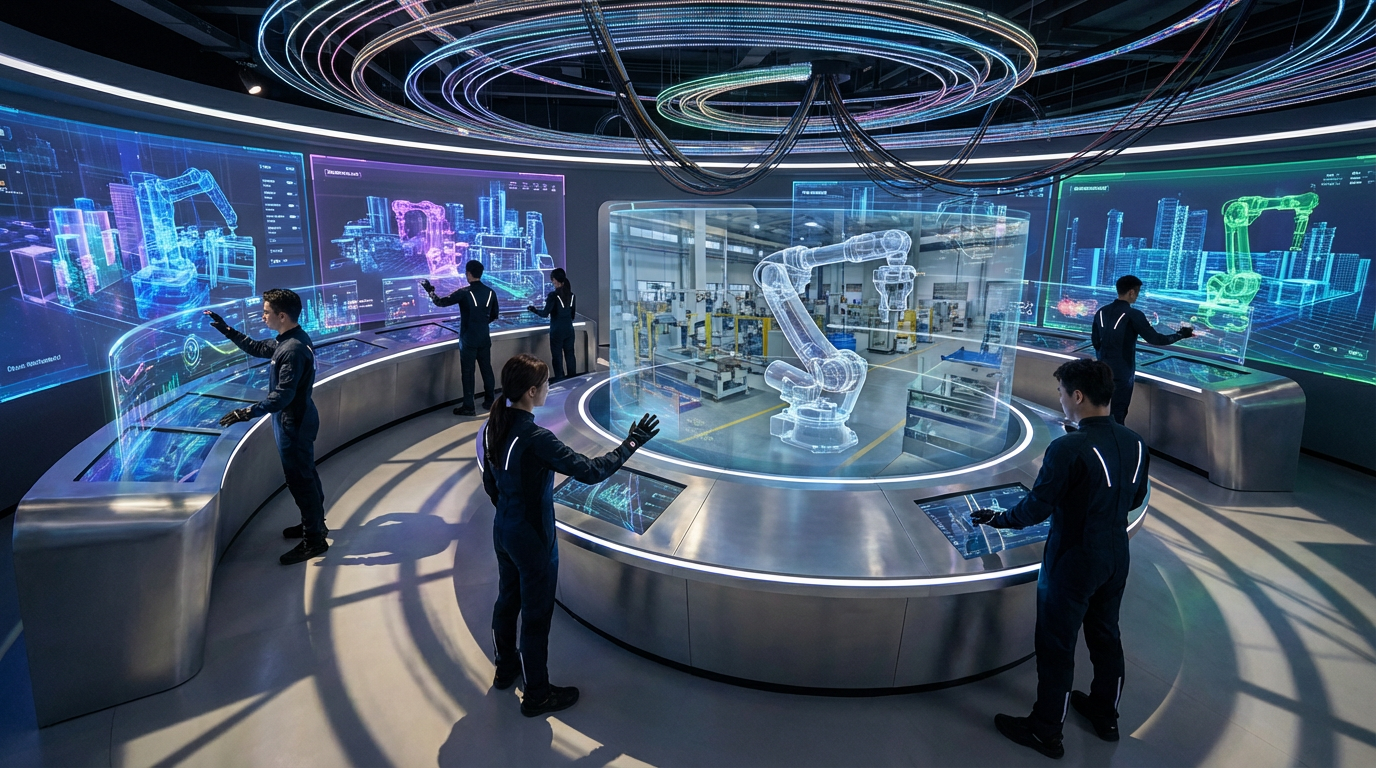
This intensive 5-day training programme on Digital Twins and Virtual Commissioning places engineering professionals, project managers, operations leaders, and digital transformation specialists at the leading edge of one of the most transformative technological developments in the history of industrial asset management and project delivery. A digital twin is not a three-dimensional model, a simulation, or a visualisation tool — it is a living, breathing, continuously updated virtual replica of a physical asset, system, or process that receives real-time data from its physical counterpart, reflects its current state with engineering accuracy, and enables decisions about the physical world to be made, tested, and optimised in the virtual world before a single bolt is turned or a single process variable is changed. Virtual commissioning extends this paradigm into the project delivery phase — enabling engineers to commission complex industrial systems, validate control logic, train operators, and identify design conflicts entirely within a virtual environment before physical commissioning begins, compressing project schedules, eliminating costly physical rework, and delivering assets that perform as designed from the first day of operation. These are not marginal improvements to existing practice — they are fundamental reimaginings of how industrial assets are designed, built, commissioned, operated, and maintained. Across Saudi Arabia's NEOM and Vision 2030 giga-projects where digital engineering is being mandated across the entire project lifecycle, ADNOC's and Saudi Aramco's integrated digital operations centres where digital twins of entire oil and gas asset portfolios are operational realities, GCC smart city and infrastructure programmes where digital twin city platforms are being built in parallel with their physical counterparts, and Africa's rapidly industrialising economies where digital twin technology is enabling the management of complex assets with engineering rigour that would previously have required physical expertise unavailable in remote operational locations — the professionals who command digital twin and virtual commissioning competency today are positioned to lead the engineering and operations organisations of the next generation. Aligned with ISO 23247 Digital Twin Manufacturing framework, IEC 62890 lifecycle management standards, and the digital engineering requirements of major regional project owners including Saudi Aramco, ADNOC, and NEOM, this programme delivers the comprehensive digital twin and virtual commissioning foundation that the engineering profession demands.
Keywords: Digital Twin Training Saudi Arabia | Virtual Commissioning Course GCC | Digital Engineering Africa | Industry 4.0 Digital Twin Riyadh · Dubai · Nairobi · Cairo
Course Information
Course Code | DTVC5001 |
Duration | 5 Days (40 Contact Hours) |
Delivery Mode | Classroom · Virtual · In-House |
Language | English (Arabic support available) |
Markets | KSA, UAE, Qatar, Kuwait, Bahrain, Oman, Egypt, Nigeria, Kenya, Ghana |
CPD Credits | 40 Hours |
Certification | Certificate of Completion · IMechE, IET & ISO 23247-aligned |
Target Audience
This course is designed for engineering and technology professionals involved in asset design, project delivery, operations management, and digital transformation across capital-intensive industry sectors:
Mechanical, electrical, process, and control engineers implementing digital twin programmes on industrial assets
Project engineers and project managers responsible for digital engineering delivery on major capital projects
Operations and maintenance engineers managing asset performance using digital twin platforms
Digital transformation directors and technology leaders evaluating and implementing digital twin strategies
Commissioning engineers and systems integrators applying virtual commissioning methodologies on complex projects
Asset integrity and reliability engineers using digital twins for predictive maintenance and failure prevention
Government engineering authorities and regulatory engineers in KSA and GCC overseeing digital engineering compliance
Oil and gas, manufacturing, utilities, and infrastructure engineers across African industrial development programmes
Learning Outcomes
Upon successful completion, participants will be able to:
Explain the architecture, data requirements, and engineering principles underpinning industrial digital twin systems across asset lifecycle stages
Design a digital twin implementation strategy aligned to organisational maturity, asset complexity, and business value objectives
Apply virtual commissioning methodology to validate control system logic, identify design conflicts, and compress physical commissioning schedules
Integrate IoT sensor networks, SCADA systems, and operational data streams into digital twin platforms for real-time asset monitoring
Use digital twin simulation and scenario modelling to optimise asset performance, predict failures, and support maintenance strategy decisions
Navigate the digital twin technology landscape, platform selection criteria, and implementation challenges specific to KSA, GCC, and African industrial environments
Learning Methods
Method | Description |
|---|---|
Expert Masterclass Sessions | Senior digital twin practitioners and engineering technology specialists with direct regional implementation experience |
Digital Twin Platform Demonstrations | Live demonstrations of industrial digital twin platforms including Siemens Teamcenter, AVEVA, Bentley iTwin, and Ansys Twin Builder |
Virtual Commissioning Simulation | Participants work through a virtual commissioning sequence for a representative industrial system — validating control logic and identifying conflicts in the virtual environment |
Architecture Design Workshops | Teams design digital twin data architectures, sensor integration strategies, and platform selection frameworks for realistic project scenarios |
Case Study Analysis | Digital twin implementation forensics from Saudi Aramco's Intelligent Field programme, ADNOC's digital operations centres, NEOM digital infrastructure, and African utility and mining digital twin deployments |
Capstone Digital Twin Strategy | Each participant develops a comprehensive digital twin implementation strategy for a real or simulated asset or project by Day 5 |
5-Day Programme Outline
Day 1 — Digital Twin Fundamentals, Architecture & the Industrial Transformation Context
Digital twin defined: the precise engineering definition, the spectrum from basic asset models to fully autonomous digital twins, and the common misconceptions that lead organisations to invest in the wrong technology
The digital twin maturity continuum: descriptive, diagnostic, predictive, prescriptive, and autonomous digital twins — understanding where value is created at each maturity level
Digital twin architecture fundamentals: physical asset layer, connectivity layer, data integration layer, analytics layer, and visualisation and interaction layer — how the components combine to create a functioning twin
Industry 4.0 and the Industrial Internet of Things as the enabling infrastructure of digital twin technology: sensor networks, edge computing, cloud platforms, and communication protocols
Digital twin standards and frameworks: ISO 23247 Digital Twin Manufacturing, IEC 62890 lifecycle management, RIBA and ISO 19650 information management standards for built environment digital twins
Digital twin in the regional context: Saudi Aramco's Intelligent Field programme, ADNOC's integrated digital operations centres, NEOM's digital city infrastructure, and the digital twin investment landscape across African industrial development programmes
Day 2 — Data Integration, IoT Connectivity & Real-Time Asset Monitoring
The data foundation of digital twins: structured and unstructured data, data quality requirements, data governance, and the data management disciplines that determine whether a digital twin delivers insight or generates noise
IoT sensor selection and deployment: measurement principles, sensor types, accuracy requirements, installation considerations, and the specific challenges of deploying sensor networks across GCC desert environments and African remote industrial sites
Industrial communication protocols: OPC-UA, MQTT, Modbus, PROFINET, and the protocol landscape that connects physical assets to digital twin platforms
SCADA and DCS integration: connecting existing control system architectures to digital twin platforms without disrupting operational systems — the integration challenge that most digital twin implementations underestimate
Edge computing and cloud architecture for digital twins: processing decisions, latency requirements, data sovereignty considerations, and the hybrid architectures that balance real-time performance with cloud analytics capability
Workshop: Participants design an IoT sensor network and data integration architecture for a representative industrial asset — a process plant, a power generation facility, or a building management system
Day 3 — Virtual Commissioning: Methodology, Tools & Project Application
Virtual commissioning defined: the systematic validation of automation and control systems using virtual models of physical equipment before physical commissioning begins
The virtual commissioning value proposition: schedule compression, rework elimination, safety improvement, and operator training — quantifying the business case for virtual commissioning investment on capital projects
Virtual commissioning workflow: 3D mechanical model development, kinematic simulation, PLC and control system emulation, HMI validation, and the integration of virtual models with real control hardware
Software tools for virtual commissioning: Siemens Process Simulate, KUKA Sim, ABB RobotStudio, Rockwell Emulate3D, and the platform selection criteria for different project types and automation architectures
Hardware-in-the-loop (HIL) testing: connecting real control hardware to virtual plant models for the highest fidelity pre-commissioning validation available before physical site work begins
Virtual commissioning on GCC and African projects: applying virtual commissioning to petrochemical facility automation, manufacturing line commissioning, and infrastructure system validation — case studies and lessons learned from regional implementation
Day 4 — Digital Twin for Operations, Maintenance & Asset Performance Management
Operational digital twins: moving from project delivery to operational value — using the digital twin to monitor, optimise, and continuously improve asset performance throughout the operational lifecycle
Predictive maintenance through digital twin: integrating condition monitoring data, physics-based degradation models, and machine learning algorithms to predict equipment failures before they occur and optimise maintenance intervals
Digital twin for process optimisation: using real-time operational data and simulation capability to optimise process parameters, energy consumption, throughput, and product quality continuously
Structural health monitoring and asset integrity digital twins: finite element model updating, fatigue life prediction, and corrosion monitoring for civil structures, pressure vessels, and pipeline networks
Operator training simulators: using high-fidelity digital twins as immersive training environments for operator qualification, emergency response training, and competency maintenance without interrupting physical operations
Lab session: Participants work with a digital twin operations platform — configuring condition monitoring alerts, running predictive maintenance scenarios, and optimising process parameters using twin-enabled simulation
Day 5 — Digital Twin Strategy, Implementation Leadership & Future Horizons
Digital twin business case development: benefit quantification across capital project, operational performance, maintenance, and safety dimensions — building the investment case that secures executive commitment
Platform selection and vendor evaluation: the digital twin technology landscape, key platform vendors, evaluation criteria, total cost of ownership modelling, and the vendor management considerations specific to long-lifecycle industrial digital twin programmes
Implementation sequencing and programme management: pilot strategy, scaling methodology, organisational change management, and the governance structures that sustain digital twin programmes through leadership changes and technology evolution
Building digital twin capability: engineering talent strategy, reskilling programmes, data science and software engineering capability alongside domain engineering expertise, and the multidisciplinary team structures that successful digital twin programmes require
The future of digital twin technology: generative AI integration, autonomous digital twins, digital twin of organisations, the metaverse industrial applications, and the technology developments that will define the next decade of digital twin capability
Capstone: Participants present their Digital Twin Implementation Strategy — covering technology architecture, data integration plan, platform selection rationale, implementation roadmap, business case, and capability development plan — for peer and facilitator review
Regional Relevance
This programme carries exceptional strategic relevance across the specific digital twin and virtual commissioning environments of KSA, GCC, and Africa. In Saudi Arabia, Saudi Aramco's Intelligent Field programme represents one of the most advanced operational digital twin deployments in the global oil and gas industry — with real-time digital twins of producing fields, processing facilities, and pipeline networks informing operational decisions across the kingdom's vast hydrocarbon infrastructure — while NEOM's requirement for digital twins of all major infrastructure assets from conception through operation is establishing a new benchmark for digital engineering on mega-projects. Across the GCC, ADNOC's integrated digital operations centre in Abu Dhabi, which monitors digital twins of the emirate's entire oil and gas asset portfolio from a single command facility, and the Dubai Digital Twin initiative creating a city-scale digital twin of the emirate's built environment, represent the regional vanguard of what digital twin technology can deliver at scale. Across Africa, digital twin technology is being deployed to solve distinctly African engineering challenges — enabling the remote monitoring and optimisation of mining assets in locations where resident engineering expertise is scarce, the management of power generation and distribution infrastructure across geographically dispersed networks, and the simulation of infrastructure performance under the climate and loading conditions specific to African environments — making digital twin not merely a technology import from more industrialised regions but an increasingly indigenous tool for solving Africa's most pressing engineering and industrial management challenges.
Assessment & Certification
Assessment Method | Digital Twin Implementation Strategy document + virtual commissioning simulation exercise |
Pass Requirement | 80% attendance + satisfactory submission of digital twin strategy and completion of simulation exercise |
Certificate Issued | Certificate of Completion in Digital Twins & Virtual Commissioning |
CPD Recognition | 40 CPD Hours — accepted by IMechE, IET, IEEE, and regional engineering and technology professional bodies |
SEO Tags: Digital twin training Saudi Arabia · Virtual commissioning course GCC · Digital engineering training Riyadh · Industry 4.0 digital twin Dubai · Digital twin Africa · IoT asset management KSA · Virtual commissioning certification UAE · Digital twin oil gas Nairobi · Predictive maintenance digital twin Qatar · Smart asset management GCC · DTVC5001