
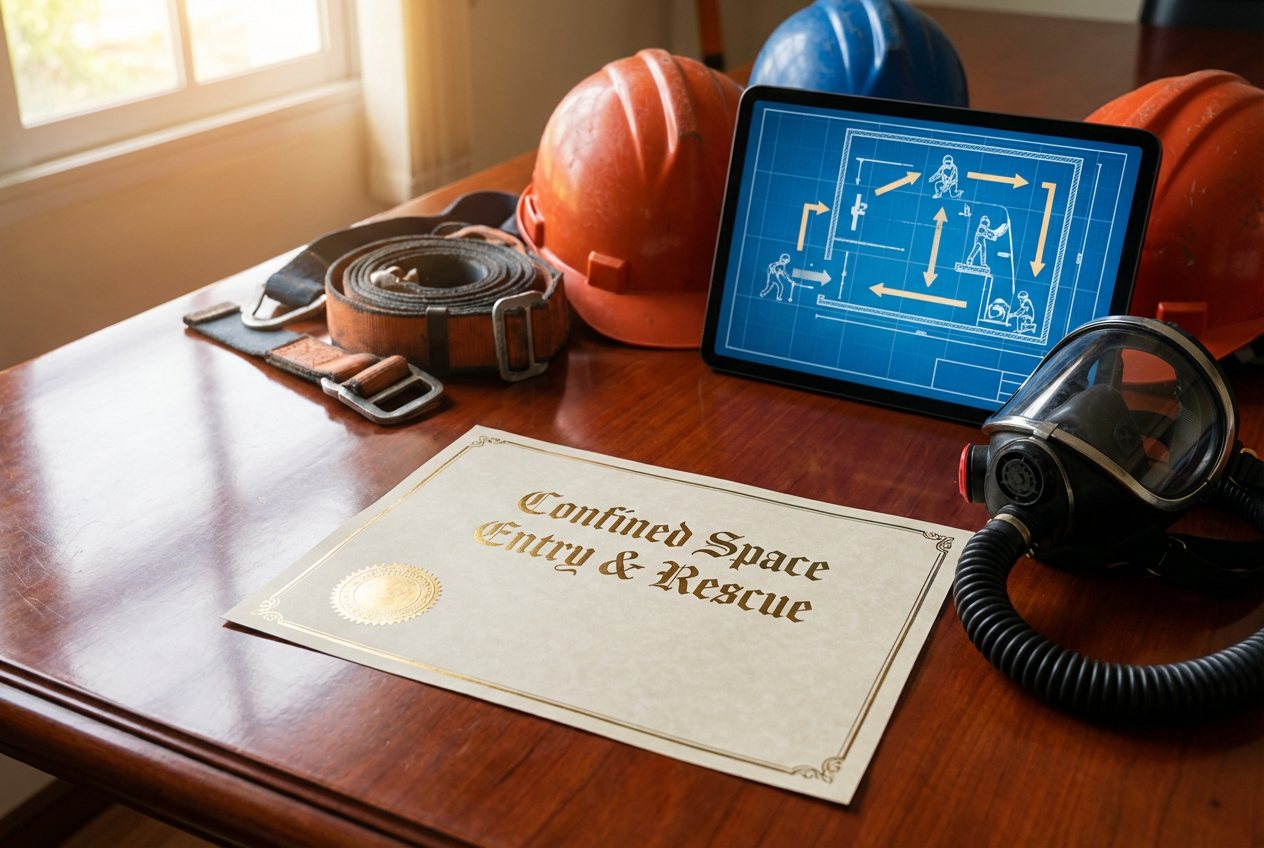
Confined Space Entry & Rescue
$1500.00
Confined Space Entry & Rescue 5-Day Course Outline - KSA, Oman & GCC
Master Confined Space Safety & Rescue Operations in Saudi Arabia, Oman & Gulf Region
The Confined Space Entry & Rescue Course is an intensive 5-day specialized program for safety professionals, supervisors, and rescue teams across Saudi Arabia (KSA), Oman, UAE, Qatar, Kuwait, and Bahrain. This comprehensive training covers hazard identification, atmospheric testing, entry procedures, and rescue operations essential for protecting workers in tanks, vessels, and confined areas across GCC industries.
Why Confined Space Training is Critical in the Middle East?
Leading cause of multiple fatality incidents in GCC workplaces
Oil & gas: storage tanks, vessels, reactors, pipelines
Saudi Aramco, ADNOC, PDO mandatory confined space programs
Construction: underground utilities, tunnels, excavations
Petrochemical facilities: confined equipment maintenance
Maritime: cargo holds, ballast tanks, engine rooms
Extreme GCC heat amplifying atmospheric hazards
Who Should Attend?
Confined space supervisors and entry attendants
HSE officers managing confined space programs
Maintenance personnel entering tanks and vessels
Emergency response and rescue team members
Safety coordinators issuing confined space permits
Industrial firefighters at oil & gas facilities
Contractors working in refineries and plants
5-Day Course Structure
Day 1: Confined Space Fundamentals & Hazard Recognition
Understanding Confined Spaces
Confined space definition: limited access/egress, not designed for continuous occupancy
Permit-required vs. non-permit spaces
Common GCC confined spaces: tanks, vessels, sewers, manholes, silos, pipelines, ship holds
Regulatory framework: OSHA 1910.146, Saudi Labor Law, Oman OSH Law
Saudi Aramco, ADNOC, PDO confined space standards
Atmospheric Hazards
Oxygen deficiency: below 19.5% - immediate danger
Oxygen enrichment: above 23.5% - fire/explosion risk
Flammable atmospheres: LEL/UEL explosion hazards
Toxic gases in GCC operations:
H2S (Hydrogen Sulfide): sour crude, sewers - deadly concentrations
CO, CO2: displacement, combustion
Benzene, toluene: petrochemical exposures
Chlorine, ammonia: chemical facilities
Inert atmospheres: nitrogen, argon asphyxiation
Heat stress in confined Gulf environments
Physical and Safety Hazards
Engulfment: liquids, solids, flowable materials
Mechanical hazards: agitators, mixers, rotating equipment
Electrical hazards in wet conditions
Extreme temperatures: hot surfaces, steam
Restricted movement and physical stress
Biological hazards: sewage, vermin, mold
Entry Hazard Assessment
Pre-entry hazard identification process
Previous contents and residue evaluation
Adjacent space hazards and interconnections
Energy sources requiring isolation
Emergency egress limitations
Documentation for permit system
Day 2: Atmospheric Testing & Monitoring
Gas Detection Equipment
Multi-gas detectors: O2, LEL, H2S, CO configurations
Electrochemical and catalytic bead sensors
Infrared (IR) and photoionization (PID) detectors
Detector selection for GCC applications
Bump testing vs. calibration requirements
Pre-Entry Atmospheric Testing
Testing sequence: oxygen, flammable, toxic (in order)
Remote sampling using probes and hoses
Testing at multiple levels: top, middle, bottom
Acceptable entry levels:
Oxygen: 19.5% to 23.5%
Flammable gas: below 10% LEL
H2S: below 10 ppm
CO: below 35 ppm
Documentation on permits
Actions for out-of-specification readings
Continuous Monitoring
Personal gas monitors for each entrant
Fixed monitoring at entry portals
Alarm setpoints and response procedures
Communication of readings to attendant
Data logging and record keeping
Ventilation Strategies
Natural vs. mechanical ventilation
Positive pressure vs. negative pressure
Air mover selection: blowers, fans, eductors
Ventilation effectiveness testing
Continuous ventilation during entry
Purging for inert or toxic atmospheres
Day 3: Entry Procedures & Permit Systems
Confined Space Entry Program
Written program requirements
Space identification and inventory
Hazard assessment and controls
Training and competency requirements
Equipment specification and inspection
Program audit and effectiveness evaluation
Permit-to-Work System
Confined space entry permit components:
Space identification and location
Authorized entrants, attendants, supervisors
Atmospheric test results
Hazards and control measures
Required equipment and PPE
Emergency and rescue arrangements
Permit duration and revalidation
Hot work permits within confined spaces
Simultaneous operations (SIMOPS)
Entry Roles and Responsibilities
Entry Supervisor: permit authorization, overall safety accountability
Authorized Entrants: following procedures, communication, immediate exit on alarm
Attendant (Hole Watch): continuous monitoring, preventing unauthorized entry, summoning rescue, never entering for rescue
Pre-Entry Preparation
Lockout/Tagout (LOTO) of energy sources
Mechanical isolation: blanking, blinding, double block and bleed
Drainage and cleaning procedures
Inerting and degassing operations
Hot work preparation: gas freeing certificates
Barricading and signage
Access equipment setup: ladders, tripods, davits
Day 4: Entry Equipment & Rescue Systems
Personal Protective Equipment
Respiratory protection:
Air-purifying respirators (APR) limitations
Supplied air respirators (SAR) for extended work
SCBA for IDLH atmospheres
Escape respirators
Full-body harnesses with retrieval D-rings
Helmets, gloves, protective clothing
Chemical suits for hazardous exposures
Cooling vests for GCC heat
Intrinsically safe lighting
Communication devices: radios, voice-powered phones
Retrieval Systems
Mechanical advantage systems: 3:1, 5:1 pulley configurations
Tripods and davit arms for vertical entries
Winches: manual, electric, pneumatic
Non-entry rescue capability - primary requirement
Retrieval lines and anchor points
Equipment inspection and load testing
Setup for various space configurations
Rescue Equipment
Emergency egress ladders
Stretchers and backboards
Rescue harnesses and lifting slings
Cutting tools and forcible entry equipment
Medical equipment: first aid, oxygen, AED
Scene lighting and air monitoring
Equipment caches and rapid deployment
Communication Systems
Visual: hand signals, light signals
Voice: direct, amplified, two-way radio
Rope signal systems
Emergency communication protocols
Testing before entry
Maintaining continuous contact
Day 5: Rescue Operations & Practical Training
Rescue Planning
Non-entry rescue vs. entry rescue criteria
Self-rescue capabilities
On-site rescue team vs. external services
Response time: immediate availability
Team composition and training requirements
Equipment staging and readiness
Coordination with Saudi Civil Defense, Oman emergency services
Non-Entry Rescue Techniques
Immediate retrieval using mechanical systems
Victim assessment from outside
Retrieval line operation
Overcoming obstacles during extraction
Two-person retrieval for unconscious victims
Post-retrieval medical assessment
Entry Rescue Operations
When entry rescue is unavoidable
Rescue team entry procedures
Additional atmospheric monitoring
Victim location in zero visibility
Patient packaging in restricted spaces
Multi-victim rescue considerations
Incident command for complex rescues
Medical Considerations
Oxygen deficiency effects: rapid unconsciousness
Toxic gas poisoning signs and symptoms
Heat-related illnesses
First aid in confined space limitations
Oxygen administration and CPR
Rapid removal vs. stabilization decisions
Handover to advanced medical services
Practical Exercises
Atmospheric testing practicals
Ventilation setup and verification
PPE donning and harness fitting
Tripod/davit rigging
Non-entry rescue drills
Entry rescue scenarios
Communication system operation
Emergency timing exercises
Performance debriefing
Case Studies
Real GCC confined space incidents
Multiple fatality analyses
Would-be rescuer deaths prevention
Permit system failures
Successful rescue operations
Industry-specific incidents
Assessment and Certification
Written examination
Practical rescue scenario assessment
Competency evaluation for all roles
Certificate of completion
Action planning for workplace implementation
Certification Benefits
Professional Recognition
International certificate recognized across GCC
Enhanced employability: Aramco, ADNOC, PDO
30-45% salary increase for specialists
Contractor HSE prequalification compliance
Foundation for rescue team leadership
Organizational Value
Zero confined space fatalities
Regulatory compliance with GCC standards
Reduced incident and compensation costs
Improved emergency response capability
Insurance premium reductions
Training Delivery Options
Classroom with practical: Riyadh, Jeddah, Dammam, Jubail, Muscat, Dubai, Abu Dhabi, Doha
Hands-on facilities: confined space simulators, rescue props
In-company programs: customized for specific facilities
Blended learning: theory online, practicals on-site
Industry-specific: oil & gas, construction, utilities, maritime
Save Lives Through Confined Space Expertise
Confined space competency is life-saving knowledge for GCC professionals. With confined spaces causing the highest workplace fatality rates, specialized training ensures worker protection and regulatory compliance in high-risk industries.
Master confined space safety and protect your workforce in the most dangerous environments.