Civil Engineering Fundamentals for Non-Civil Engineers
$3500.00
Civil Engineering Fundamentals for Non-Civil Engineers: 5-Day Intensive Course
Course Overview
This comprehensive 5-day training program is designed for professionals from non-civil engineering backgrounds who need to understand civil engineering principles for project management, interdisciplinary collaboration, or career development. Whether you’re an architect, project manager, construction supervisor, or technical professional, this course provides essential knowledge without requiring advanced mathematics or engineering prerequisites.
Target Audience: Project managers, architects, construction managers, real estate developers, environmental professionals, facility managers, and technical coordinators working with civil engineering projects.
Day 1: Introduction to Civil Engineering & Structural Fundamentals
Morning Session: Civil Engineering Overview (9:00 AM - 12:00 PM)
What is Civil Engineering?
Understanding the five major disciplines: structural, geotechnical, transportation, water resources, and construction engineering. Learn how civil engineers shape the built environment and infrastructure that supports modern society.
Key Topics:
Historical development of civil engineering practices
Professional roles and responsibilities in civil projects
Understanding engineering codes, standards, and regulations
Project lifecycle from conception to completion
Introduction to engineering drawings and blueprints
Afternoon Session: Basic Structural Concepts (1:00 PM - 5:00 PM)
Forces and Loads:
Understanding dead loads, live loads, wind loads, and seismic forces. Learn how structures resist gravity, lateral forces, and environmental impacts without complex calculations.
Structural Elements:
Beams, columns, slabs, and foundations
Tension, compression, shear, and bending concepts
Material properties: concrete, steel, timber, and masonry
Safety factors and design principles
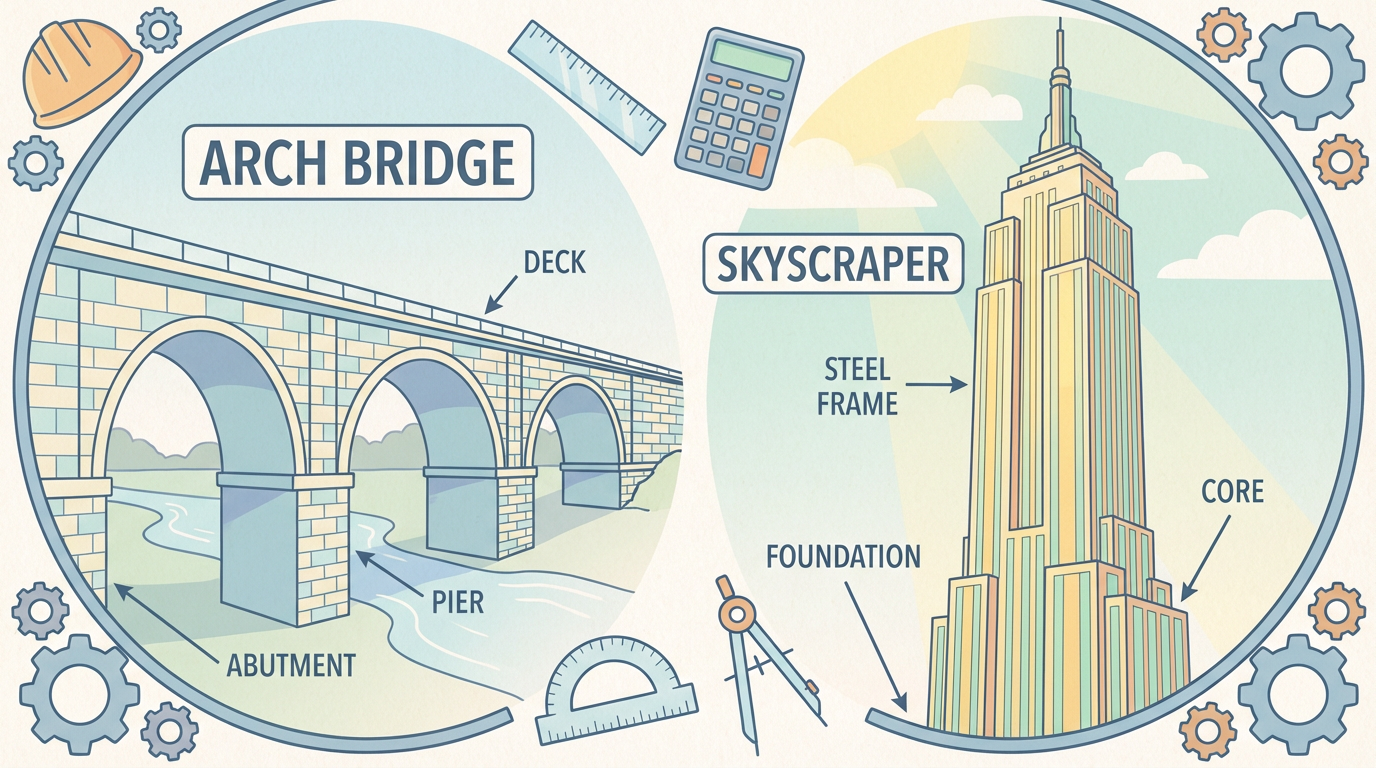
Common structural systems in buildings and bridges
Practical Exercise: Blueprint reading workshop and site visit video analysis
Day 2: Geotechnical Engineering & Foundation Systems
Morning Session: Soil Mechanics Basics (9:00 AM - 12:00 PM)
Understanding Soil Behavior:
Learn why soil properties matter for construction. Explore soil classification, bearing capacity, and settlement concepts that affect foundation design.
Key Topics:
Soil types and classification systems
Site investigation and soil testing methods
Groundwater and its effects on construction
Soil compaction and stabilization techniques
Slope stability and earth retention systems
Afternoon Session: Foundation Design Principles (1:00 PM - 5:00 PM)
Foundation Types and Applications:
Understanding shallow foundations (footings, mats) versus deep foundations (piles, caissons). Learn when each system is appropriate and how foundation failures occur.
Topics Covered:
Foundation selection criteria
Bearing capacity and settlement analysis
Retaining walls and earth pressure
Foundation construction methods
Common foundation problems and solutions
Case Studies: Leaning Tower of Pisa, foundation failures, and successful remediation projects
Day 3: Transportation Engineering & Infrastructure
Morning Session: Highway and Road Design (9:00 AM - 12:00 PM)
Transportation System Planning:
Understanding road networks, geometric design, and traffic engineering fundamentals that create safe, efficient transportation infrastructure.
Key Elements:
Horizontal and vertical alignment principles
Sight distance and road safety features
Pavement types: flexible (asphalt) vs. rigid (concrete)
Drainage systems for roadways
Traffic signs, markings, and control devices
Afternoon Session: Urban Infrastructure Systems (1:00 PM - 5:00 PM)
Beyond Roads:
Exploring railways, airports, ports, and mass transit systems. Understanding how multimodal transportation networks integrate with urban development.
Topics:
Railway engineering basics and track components
Airport runway and taxiway design considerations
Parking facilities and traffic management
Sustainable transportation solutions
Smart city infrastructure and ITS (Intelligent Transportation Systems)
Interactive Activity: Transportation project evaluation using real-world examples
Day 4: Water Resources & Environmental Engineering
Morning Session: Hydraulics and Water Supply (9:00 AM - 12:00 PM)
Water Infrastructure Fundamentals:
Understanding how water flows, is stored, treated, and distributed in municipal systems. Learn about pipes, pumps, and water quality considerations.
Core Concepts:
Open channel flow and pipe flow principles
Water treatment processes and standards
Distribution network design
Storage tanks and reservoirs
Water pressure and flow rate basics
Afternoon Session: Drainage, Sewerage & Stormwater Management (1:00 PM - 5:00 PM)
Managing Wastewater:
Understanding sanitary sewers, stormwater systems, and sustainable drainage solutions that protect public health and the environment.
Topics Covered:
Sanitary sewer system design principles
Stormwater management and detention ponds
Combined vs. separate sewer systems
Erosion and sediment control
Low Impact Development (LID) and green infrastructure
Flood control and mitigation strategies
Case Study Review: Urban flooding solutions and SUDS (Sustainable Urban Drainage Systems)
Day 5: Construction Management & Project Integration
Morning Session: Construction Methods and Materials (9:00 AM - 12:00 PM)
From Design to Construction:
Understanding how engineering designs become reality. Learn about construction sequencing, quality control, and material selection.
Essential Topics:
Concrete technology: mixing, placing, curing
Steel erection and connections
Construction equipment and methods
Quality assurance and testing procedures
Safety management on construction sites
Afternoon Session: Project Coordination & Professional Practice (1:00 PM - 4:00 PM)
Interdisciplinary Collaboration:
Learn how civil engineers interact with architects, MEP engineers, contractors, and stakeholders throughout project delivery.
Key Areas:
Project delivery methods: design-bid-build, design-build, CM at-risk
Reading and coordinating construction documents
RFIs, submittals, and change orders
Cost estimation fundamentals
Sustainability and LEED considerations
Building Information Modeling (BIM) basics
Closing Session: Integration Workshop (4:00 PM - 5:00 PM)
Capstone Exercise:
Participants work in teams to review a sample civil engineering project, identifying structural, geotechnical, transportation, and water resource components while discussing coordination challenges.
Course Wrap-up:
Q&A session with industry practitioners
Resource guide and continuing education recommendations
Certificate of completion presentation
Learning Outcomes
Upon completion, participants will be able to:
Communicate effectively with civil engineers using proper terminology
Read and interpret basic engineering drawings and specifications
Understand project requirements across civil engineering disciplines
Identify potential issues during planning and construction phases
Contribute meaningfully to interdisciplinary project teams
Make informed decisions when civil engineering input is required
Course Materials Included
Comprehensive participant workbook with reference materials
Engineering drawing samples and case study documents
Access to online resource library
Certificate of completion (30 professional development hours)
Prerequisites
No engineering background required. Basic understanding of construction or infrastructure projects helpful but not mandatory.
Keywords: civil engineering course, non-engineers training, structural engineering basics, construction fundamentals, infrastructure training, project management engineering, civil engineering overview, foundation engineering, transportation engineering course, water resources training