
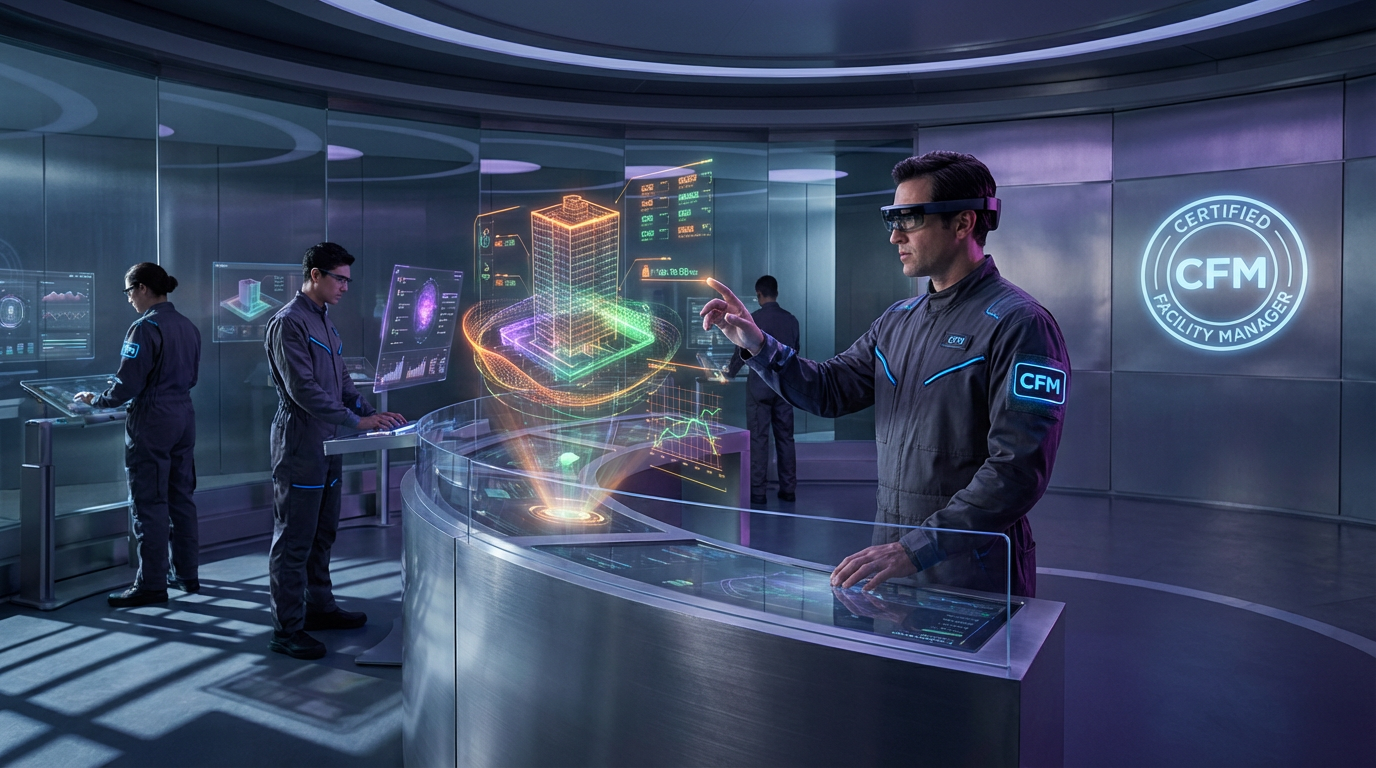
Certified Facility Manager (CFM)
$3500.00
Certified Facility Manager (CFM): 5-Day Professional Training Course
Course Overview
This comprehensive Certified Facility Manager Training provides essential knowledge and skills for professional facility management excellence. This intensive 5-day program covers facility management fundamentals, operations and maintenance, sustainability and energy management, project management, leadership, emergency preparedness, and CFM exam preparation aligned with IFMA (International Facility Management Association) Body of Knowledge.
Who Should Attend This CFM Course?
Facility Managers seeking professional certification
Building Managers advancing their careers
Operations Managers in facility management
Maintenance Supervisors transitioning to management
Property Managers expanding expertise
Corporate Real Estate Managers
Project Managers in facility projects
Engineering Managers in facilities
Aspiring Facility Management Professionals
Course Objectives
Participants will master facility management principles, operations and maintenance best practices, sustainability strategies, space planning and management, financial management, human resources leadership, technology integration, emergency preparedness, and CFM exam competencies across all IFMA knowledge domains.
Day 1: Facility Management Fundamentals and Operations
Morning Session: Introduction to Facility Management
Topics Covered:
Facility management definition and evolution
IFMA competency model and Body of Knowledge
FM career paths and professional development
Core competencies: operations, finance, people, projects
Total Cost of Ownership (TCO) perspective
Strategic vs. tactical facility management
Role of FM in organizational success
Industry standards: ISO 41001, EN 15221
CFM certification requirements and exam overview
FM Scope and Responsibilities:
Workplace management and space planning
Building operations and maintenance
Sustainability and environmental stewardship
Health, safety, and security
Real estate and property management
Strategic planning and forecasting
Afternoon Session: Operations and Maintenance Management
Topics Covered:
Building systems knowledge: HVAC, electrical, plumbing, fire protection
Preventive maintenance program development
Computerized Maintenance Management Systems (CMMS)
Work order management and prioritization
Predictive and condition-based maintenance
Contractor and vendor management
Service Level Agreements (SLA) development
Key Performance Indicators (KPIs) for O&M
Maintenance budget planning and control
Asset lifecycle management
Maintenance Strategies:
Reactive vs. proactive maintenance
Reliability-centered maintenance (RCM)
Total Productive Maintenance (TPM)
Outsourcing vs. in-house decisions
Quality control and assurance
Workshop:
Developing preventive maintenance plan for commercial building systems.
Day 2: Sustainability, Energy Management, and Real Estate
Morning Session: Sustainability and Environmental Stewardship
Topics Covered:
Sustainable facility management principles
Triple bottom line: people, planet, profit
Green building standards: LEED, BREEAM, WELL
Energy management and conservation strategies
Carbon footprint reduction initiatives
Water conservation and management
Waste management and recycling programs
Indoor environmental quality (IEQ)
Sustainable procurement practices
Corporate social responsibility (CSR) in FM
Energy Management:
Energy audits and benchmarking
ENERGY STAR certification and ratings
Building automation systems (BAS)
Renewable energy integration
Utility management and cost control
Measurement and verification (M&V)
Afternoon Session: Real Estate and Space Management
Topics Covered:
Strategic real estate portfolio management
Lease vs. own analysis
Space planning and allocation methodologies
Workplace strategy: hoteling, hot-desking, activity-based working
Move management and churn reduction
Occupancy analysis and optimization
Stack and block planning
Computer-Aided Facility Management (CAFM)
Geographic Information Systems (GIS)
Furniture, Fixtures, and Equipment (FF&E) management
Space Standards:
Developing space allocation policies
Industry benchmarks: square feet per person
Utilization studies and metrics
Growth planning and flexibility
Universal design principles
Case Study:
Space optimization project for corporate headquarters consolidation.
Day 3: Financial Management and Project Management
Morning Session: Financial Management for Facilities
Topics Covered:
Facility budget development and management
Capital vs. operational expenditures (CAPEX vs. OPEX)
Cost allocation methodologies: chargebacks, rentable square feet
Financial planning and forecasting
Cost-benefit analysis and business case development
Return on Investment (ROI) calculations
Life-cycle cost analysis (LCCA)
Benchmarking and performance metrics
Financial reporting and dashboards
Variance analysis and corrective actions
Procurement and Contracts:
Competitive bidding and RFP processes
Contract types: fixed price, cost-plus, time and materials
Contract negotiation strategies
Performance-based contracting
Risk allocation and insurance requirements
Afternoon Session: Project Management in Facilities
Topics Covered:
Facility project lifecycle and phases
Project initiation and business case
Scope definition and requirements gathering
Work Breakdown Structure (WBS)
Project scheduling: Gantt charts, critical path method
Resource allocation and leveling
Budget management and cost control
Quality management and inspections
Risk management and mitigation
Stakeholder communication and management
Project closeout and lessons learned
PM software tools: MS Project, Primavera
Capital Projects:
Renovation and retrofit projects
Building expansion management
Tenant improvement coordination
Commissioning and handover
Exercise:
Developing project plan for facility renovation including schedule, budget, and stakeholder communication.
Day 4: Human Resources, Leadership, and Technology
Morning Session: Human Resources and Leadership
Topics Covered:
Leadership vs. management in facility operations
Team building and motivation strategies
Performance management and evaluation
Recruitment and talent acquisition
Training and development programs
Succession planning for facility teams
Change management in FM organizations
Conflict resolution techniques
Diversity and inclusion initiatives
Labor relations and union considerations
Organizational development and culture
Communication Skills:
Stakeholder engagement strategies
Presentation skills for executives
Negotiation techniques
Influencing without authority
Cross-functional collaboration
Afternoon Session: Technology in Facility Management
Topics Covered:
Integrated Workplace Management Systems (IWMS)
Building Management Systems (BMS) and automation
IoT and smart building technologies
Computer-Aided Facility Management (CAFM)
Mobile applications for facility operations
Cloud-based FM platforms
Data analytics and business intelligence
Cybersecurity for facility systems
BIM (Building Information Modeling) in FM
Digital twins for facility optimization
Emerging technologies: AI, AR/VR in FM
Technology Selection:
Needs assessment and requirements
Vendor evaluation and selection
Implementation planning
Change management for technology adoption
ROI measurement for technology investments
Demo:
Exploring IWMS platform features and capabilities for facility management.
Day 5: Emergency Preparedness, Risk Management, and CFM Exam Prep
Morning Session: Emergency Preparedness and Business Continuity
Topics Covered:
Emergency management planning and preparedness
Risk assessment and vulnerability analysis
Business Continuity Plan (BCP) development
Disaster Recovery Plan (DRP) for facilities
Emergency response procedures and protocols
Crisis communication strategies
Evacuation planning and drills
Incident Command System (ICS) basics
Natural disasters: earthquake, flood, hurricane preparedness
Security threats and active shooter response
Pandemic planning and infectious disease management
Testing, training, and plan maintenance
Risk Management:
Enterprise Risk Management (ERM) framework
Insurance requirements and coverage
Health and safety compliance: OSHA regulations
Environmental compliance and reporting
Fire safety and life safety systems
Indoor air quality management
Accessibility compliance: ADA, fair housing
Afternoon Session: CFM Exam Preparation
IFMA Core Competencies Review:
1. Operations and Maintenance:
Building systems and preventive maintenance
Asset management and capital planning
Quality assurance programs
2. Sustainability:
Environmental management systems
Energy and resource conservation
Green building practices
3. Facility Finance and Business:
Budget development and management
Financial analysis and reporting
Procurement and contracts
4. Human and Environmental Factors:
Workplace management and ergonomics
Health, safety, and security
Indoor environmental quality
5. Leadership and Strategy:
Strategic facility planning
Change management
Performance measurement
6. Real Estate and Property Management:
Portfolio management
Lease administration
Property operations
7. Project Management:
Project planning and execution
Construction and renovation management
Commissioning processes
8. Technology:
IWMS and automation systems
Data management and analytics
9. Communication:
Stakeholder engagement
Presentation and reporting
10. Emergency Preparedness and Business Continuity:
Risk management and mitigation
Crisis response planning
Exam Strategies:
Question format and structure
Time management techniques
Elimination strategies
Study resources and materials
Practice questions and mock exams
Application process and requirements
Final Assessment and Certification Guidance
Comprehensive Review:
Practice exam with 100+ CFM-style questions
Group discussion on challenging topics
Case study analysis integrating multiple competencies
Scenario-based problem-solving
Assessment Activities:
Written examination covering all IFMA competency areas
Case study presentation: integrated facility management challenge
Project plan development exercise
Budget analysis and financial modeling
Emergency response scenario evaluation
Certificate of Course Completion
Post-Course Support:
CFM exam application guidance
Study plan and resource recommendations
Online study group coordination
Practice exam access
Continuing education opportunities
Course Benefits and Learning Outcomes
Participants will understand facility management principles, manage operations effectively, implement sustainability programs, plan and execute projects, lead facility teams, apply financial management, leverage technology, ensure emergency preparedness, and prepare thoroughly for CFM certification exam.
Training Methodology
Instructor-led sessions with case studies from diverse industries, hands-on exercises, financial modeling workshops, project planning activities, technology demonstrations, group discussions, mock exam practice, and peer learning.
Course Materials
Comprehensive CFM study guide, IFMA Body of Knowledge reference, practice exam questions, financial calculation templates, project management tools, sustainability checklists, emergency planning templates, and course completion certificate.
CFM Exam Information
Eligibility Requirements:
Option 1: Bachelor’s degree + 2 years FM experience
Option 2: High school diploma + 5 years FM experience
Exam: 150 multiple-choice questions, 3.5 hours
Passing score: scaled score of 200/300
Prerequisites
Recommended: 2+ years facility management experience, bachelor’s degree preferred, basic knowledge of building systems, financial acumen, and commitment to professional certification.
Keywords: Certified Facility Manager, CFM certification training, IFMA CFM exam, facility management course, operations and maintenance management, sustainable facility management, IWMS technology, facility project management, emergency preparedness FM, space planning management, facility financial management, building operations, CFM exam preparation, professional facility manager, facility leadership, real estate management, energy management facilities, workplace management, facility risk management, CFM study course