Artificial lift systems
$5500.00
Artificial Lift Systems: Comprehensive 5-Day Training Course
Course Overview
This specialized Artificial Lift Systems training program delivers essential expertise for petroleum professionals across the Kingdom of Saudi Arabia (KSA), Oman, GCC countries (UAE, Qatar, Kuwait, Bahrain), and Africa. The course covers gas lift, electric submersible pumps (ESP), progressive cavity pumps (PCP), sucker rod pumps, selection criteria, design methodologies, troubleshooting, and optimization strategies essential for maximizing oil and gas production from wells with insufficient natural reservoir pressure.
With 60-80% of global wells requiring artificial lift and the Middle East operating thousands of mature fields, this training addresses critical competencies for professionals at Saudi Aramco, PDO, ADNOC, Kuwait Oil Company, optimizing production economics, extending field life, supporting Saudi Vision 2030 hydrocarbon production sustainability.
Target Audience
Production Engineers designing artificial lift systems in Saudi Arabia, Oman, GCC, Africa
Operations Engineers managing lift operations and troubleshooting
Field Supervisors overseeing installations and operations
Facilities Engineers integrating lift systems with surface facilities
Optimization Engineers maximizing production and minimizing costs
Day 1: Artificial Lift Fundamentals & Gas Lift Systems
Morning Session: Artificial Lift Principles & Selection
Natural vs. artificial lift: reservoir energy depletion requiring intervention
When lift needed: insufficient pressure, high water cut, low productivity
Lift methods overview: gas lift, ESP, PCP, sucker rod pumps, hydraulic pumps
Selection criteria: production rate, depth, fluid properties (viscosity, GOR, water cut), deviation
Economic considerations: capital cost, operating cost, efficiency, run life
Selection charts: applicability ranges for depth, rate, fluid properties
Regional applications: Saudi Arabia mature fields (Ghawar), Oman heavy oil, UAE offshore
Nodal analysis: system optimization, tubing size, operating point
Case studies: Lift selection for Saudi Arabian and African developments
Afternoon Session: Gas Lift Technology & Design
Gas lift principles: injecting gas to reduce fluid density, enabling flow
Advantages: high rate (5,000+ BPD), solids tolerance, flexibility, deviated wells
Most common in Saudi Arabia (Ghawar), UAE, Oman mature reservoirs
Continuous vs. intermittent: steady injection vs. cyclic for low-rate wells
System components: compressor, distribution manifold, flowlines, injection lines
Downhole equipment: gas lift mandrels (side pocket, conventional), valves
Gas lift valves: IPO (injection pressure-operated), PPO (production pressure-operated)
Valve spacing design: depth calculation, unloading sequence
Design calculations: gas injection rate, operating pressure, gradient curves
Performance optimization: depth of injection, gas rate, surface choke
Workshop: Gas lift design calculations for declining reservoir pressure well
Day 2: Electric Submersible Pump (ESP) Systems
Morning Session: ESP Fundamentals & Components
ESP principles: multistage centrifugal pump, high-rate capability (500-50,000+ BPD)
Applications: high-volume wells, offshore (UAE, Saudi Arabia), vertical/deviated wells
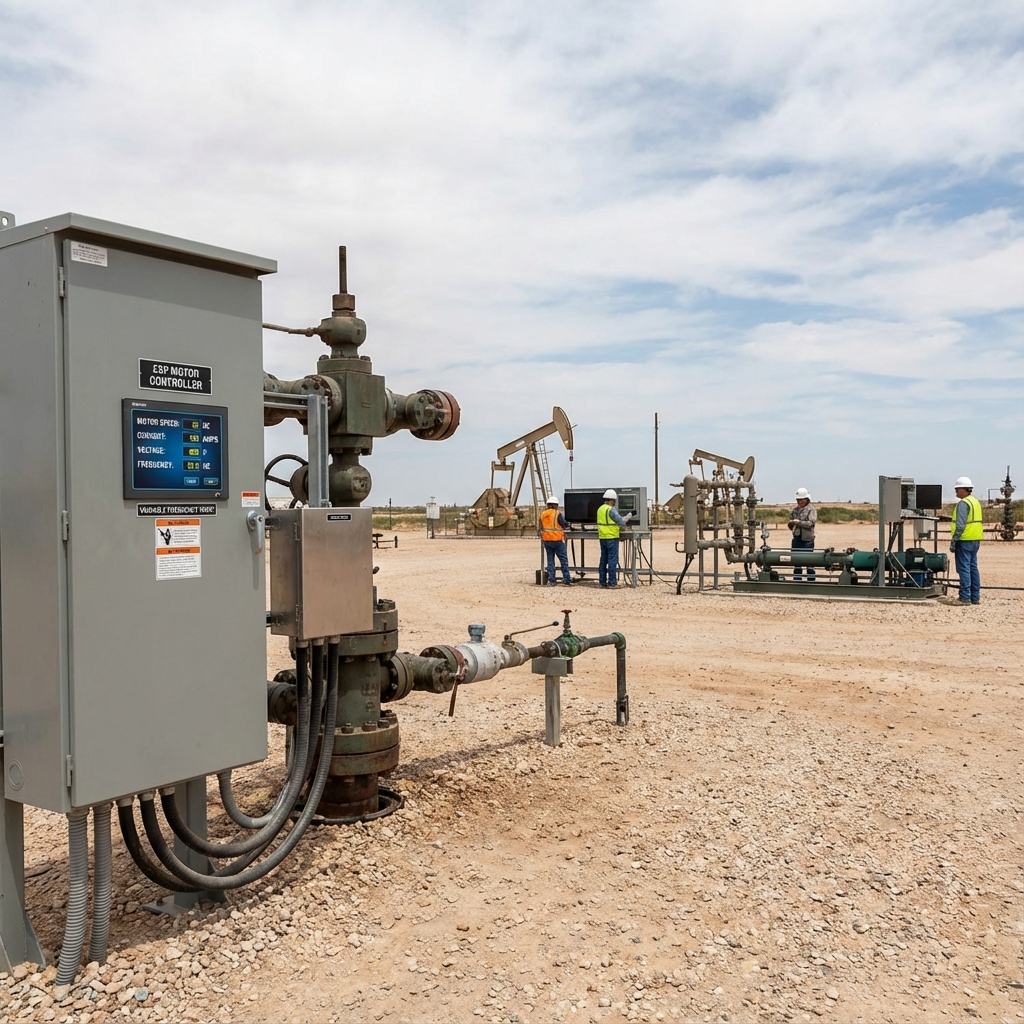
System components: pump, motor, seal, gas separator, power cable, surface equipment
Centrifugal pump: stages, impeller/diffuser design, head per stage, pump curves
Electric motor: horsepower, voltage, cooling (oil-filled, water-cooled), temperature limits
Seal/protector: thrust bearing, oil expansion, protecting motor from wellbore fluids
Gas separator: rotary, poor-boy designs, preventing gas locking
Surface equipment: VSD (variable speed drive), transformer, motor control center
ESP selection: production target, total dynamic head (TDH), fluid properties
Motor sizing: hydraulic horsepower, efficiency, brake horsepower calculation
Afternoon Session: ESP Design, Operations & Troubleshooting
Design methodology: production requirement, setting depth, submergence, stages calculation
TDH calculation: friction losses, surface pressure, flowing bottomhole pressure
Gas handling: free gas effects, separator selection, downhole gas separation
Installation: running procedures, landing, electrical connections, commissioning
Operations monitoring: motor current, vibration, temperature, intake/discharge pressure
VSD benefits: soft start, speed control, energy efficiency, production optimization
Common failures: motor burnout, shaft breakage, thrust bearing, cable damage
Troubleshooting: high motor temperature, low/high amperage, vibration, decline
Run life optimization: proper sizing, solids control, corrosion inhibition
Regional considerations: high-temperature Saudi wells, sandy production, scaling
Workshop: ESP system design and sizing for high-rate oil producer
Day 3: Progressive Cavity & Sucker Rod Pumps
Morning Session: Progressive Cavity Pump (PCP) Systems
PCP principles: positive displacement, rotor-stator geometry, continuous flow
Advantages: high viscosity (heavy oil), solids tolerance, low shear, gas handling
Applications: Saudi Arabia heavy oil, Oman viscous crude, African heavy oil
Rotor-stator design: single-lobe to multi-lobe, interference fit, seal lines
Elastomer selection: NBR, HNBR, Viton, temperature/fluid compatibility (up to 150°C)
Drive systems: surface-driven (rod string), hydraulic motors, electric motors
PCP selection: flow rate calculation, differential pressure capability, stages
Operations: speed control, torque monitoring, production optimization
Troubleshooting: stator wear, rotor damage, rod string failure, surface drive issues
Regional: Heavy oil in Saudi Wafra field, Oman Mukhaizna
Afternoon Session: Sucker Rod Pump (SRP) Systems
SRP principles: reciprocating positive displacement, most common lift globally
Applications: mature fields, low-moderate rate (5-1,500 BPD)
Surface equipment: pumping unit (beam pump, mark II), prime mover (motor, engine)
Downhole components: barrel, plunger, valves (standing, traveling), gas anchor
Rod string: sucker rods (API grades C, K, D), couplings, polished rod
Design methodology: pump displacement, stroke length (S), strokes per minute (N)
Rod string design: maximum load, stress analysis, taper design, buckling
Dynamometer analysis: surface/downhole cards, diagnosing pump performance
Common problems: pump-off, gas locking, fluid pounding
Card interpretation: normal, gas interference, valve leaking, fluid pound
Troubleshooting: production decline, high power, rod/tubing wear
Optimization: stroke length/rate adjustment, pump depth, controller settings
Workshop: SRP design and dynamometer card analysis
Day 4: Alternative Methods & Optimization
Morning Session: Hydraulic Pumps & Plunger Lift
Hydraulic pump principles: power fluid driving downhole pump, surface-controlled
Advantages: multiple wells from central facility, easy changeouts, offshore platforms
Pump types: reciprocating (piston), jet pump (Venturi principle)
Jet pumps: no moving parts, low maintenance, solids tolerance
Applications: offshore, remote locations, Saudi Arabia, African fields
Plunger lift principles: using well pressure to lift liquid slugs, gas-assisted
Applications: gas wells with liquids loading, low-rate oil wells, deliquification
Operating cycle: buildup, upstroke, unloading, downstroke
Advantages: low cost, simple, no downhole power
Limitations: minimum gas rate required, depth limitations
Lift method comparison: rate, depth, fluid properties, cost, applications
Afternoon Session: Production Surveillance & Optimization
Optimization objectives: maximizing production, minimizing costs, extending equipment life
Gas lift optimization: injection rate, depth, valve performance, multi-well allocation
ESP optimization: speed control (VSD), submergence, intake pressure management
SRP optimization: stroke rate/length adjustment, pump fillage, energy efficiency
Production surveillance: real-time monitoring, data acquisition, alarm systems
Key performance indicators: production rate, run life, energy efficiency, failures
ESP monitoring: motor temperature, current, vibration, intake/discharge pressure
SRP monitoring: load, position, fillage, power consumption, pump-off control
Gas lift monitoring: injection rate, casing pressure, flowline pressure
Data analytics: trend analysis, predictive maintenance, machine learning
Digital oilfield: SCADA systems, automation, remote operations
Saudi Aramco intelligent fields, ADNOC digital transformation
Day 5: Troubleshooting & Advanced Technologies
Morning Session: Systematic Troubleshooting
Gas lift problems: inadequate gas supply, valve failures, liquid loading, unstable flow
ESP failures: motor burnout, shaft breakage, bearing failure, cable damage, gas locking
PCP issues: stator wear, rotor damage, elastomer failure, rod string problems
SRP problems: pump-off, gas locking, fluid pound, rod/tubing wear, parted rods
Diagnostic approach: data collection, symptom identification, root cause analysis
Performance analysis: production trends, pressure data, equipment parameters
Failure analysis: teardown inspection, metallurgical analysis, lessons learned
Corrective actions: design changes, operational adjustments, preventive measures
Well testing: periodic testing, allocation, performance verification
Decline analysis: forecasting production, identifying intervention needs
Workshop: Troubleshooting scenarios from GCC and African operations
Afternoon Session: Advanced Technologies & Future Trends
High-temperature ESP: motors/cables rated 300°C+, applications in deep Saudi wells
Permanent magnet motors: higher efficiency, smaller diameter, improved power factor
Multiphase pumps: handling high gas fractions, reducing separation requirements
Intelligent completions integration: ICV coordination with lift systems
Downhole sensors: permanent monitoring (pressure, temperature, flow), fiber optics
Corrosion-resistant materials: CRAs for sour service (H2S in Khuff), extended run life
Rod lift innovations: fiberglass rods, continuous rods, advanced controllers
Hybrid systems: combining lift methods (gas lift + ESP), optimizing for conditions
Renewable energy integration: solar-powered lift for remote African locations
Predictive maintenance: AI/ML for failure prediction, optimizing intervention timing
Digital twins: virtual well models for optimization, scenario testing
Automation: autonomous operations, self-adjusting systems, reduced intervention
Energy transition: lift systems for geothermal, carbon capture wells
Final workshop: Comprehensive lift optimization project
Learning Outcomes
Upon completion, participants will be able to:
Select optimal artificial lift methods based on well conditions, production targets, economics
Design gas lift systems including valve sizing, spacing, unloading procedures
Size ESP systems calculating stages, horsepower, equipment selection
Design SRP systems including pump sizing, rod string design
Troubleshoot lift system problems using systematic diagnostic approaches
Optimize production through surveillance, analysis, adjustment strategies
Apply digital technologies for monitoring, analytics, predictive maintenance
Course Delivery & Certification
Format: Technical lectures, design workshops, troubleshooting exercises, case studies
Software: Introduction to nodal analysis tools (PROSPER/PIPESIM concepts)
Materials: Manual, design charts, vendor catalogs, calculation spreadsheets, troubleshooting guides
Certification: Professional certificate recognized across KSA, Oman, UAE, Qatar, Kuwait, Bahrain, Africa
Language: English (Arabic support available)
CPD Credits: Continuing professional development for petroleum engineers
Locations: Riyadh, Dhahran, Khobar (KSA), Muscat (Oman), Dubai, Abu Dhabi, Doha, Lagos, Cairo
Why This Course is Critical
Artificial lift enables production from 60-80% of global wells, adding billions in incremental recovery. Saudi Arabia’s mature fields (Ghawar, Abqaiq) increasingly require lift. Oman’s heavy oil depends on PCP technology. Optimal lift selection saves 20-40% in operating costs. Poor design causes premature failures costing $50,000-$500,000 per intervention. Leading operators achieve 95%+ runtime through proper design, monitoring, optimization.
This training delivers practical expertise incorporating API standards, Saudi Aramco best practices, vendor technologies (Schlumberger, Baker Hughes, Weatherford), addressing high temperatures, H2S environments, heavy oil, remote locations, supporting production sustainability and Saudi Vision 2030 upstream efficiency goals.
Lift effectively. Optimize continuously. Maximize production.