
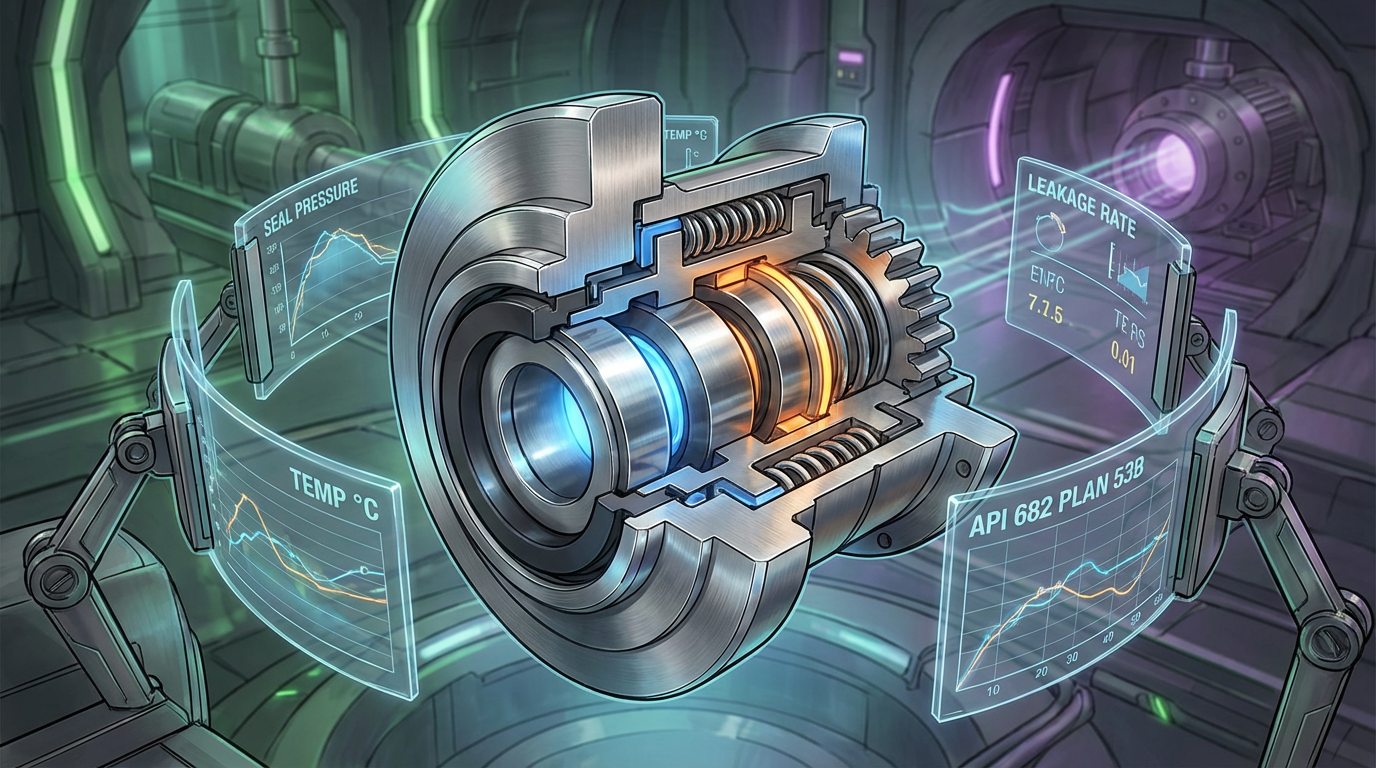
API 682 : Pumps - Shaft Sealing Systems for Centrifugal and Rotary Pumps
$3500.00
API 682 - Shaft Sealing Systems for Centrifugal and Rotary Pumps
5-Day Professional Training Course
Course Overview
This intensive 5-day API 682 training course provides comprehensive knowledge of mechanical seal systems for centrifugal and rotary pumps according to API Standard 682 (5th Edition). The course covers seal design, selection, installation, operation, troubleshooting, and maintenance of shaft sealing systems in process industries.
Target Audience: Mechanical engineers, reliability engineers, maintenance engineers, pump engineers, rotating equipment specialists, seal technicians, plant engineers, and professionals responsible for pump sealing systems in oil & gas, petrochemical, chemical processing, and power generation industries.
Day 1: Fundamentals and API 682 Overview
Morning Session (0900-1230)
Module 1: Course Introduction & Sealing Fundamentals
Course objectives and structure
Introduction to shaft sealing technology
History and evolution of mechanical seals
Why seals fail: common causes and statistics
Economic impact of seal failures
Safety and environmental considerations
Module 2: API 682 Standard Overview
API 682 5th Edition (2021) structure and scope
Purpose and applicability
Key changes from 4th Edition
Integration with API 610 (Centrifugal Pumps)
Integration with API 676 (Rotary Pumps)
Terminology and definitions
Compliance requirements
Documentation and data sheets
Afternoon Session (1330-1700)
Module 3: Mechanical Seal Design Principles
Basic seal components and nomenclature
Seal face materials (carbon, silicon carbide, tungsten carbide, ceramics)
Secondary sealing elements (O-rings, gaskets, wedges)
Seal face loading mechanisms
Balance ratio and closing forces
Heat generation and dissipation
PV (Pressure-Velocity) limits
Lubrication regimes (boundary, mixed, hydrodynamic)
Face geometry and flatness requirements
Module 4: Seal Configuration Types
Single seals: Inside/outside mounted, pusher/non-pusher
Dual seals: Back-to-back, face-to-face, tandem arrangements
Cartridge seals: Benefits and applications
Component seals vs. cartridge seals
Split seals for repair without pump disassembly
Mixing device seals
Seal selection criteria based on service conditions
Day 2: API 682 Seal Arrangements and Plans
Morning Session (0900-1230)
Module 5: API 682 Seal Arrangements
Arrangement 1: Single seal - unpressurized
Arrangement 2: Single seal - pressurized
Arrangement 3: Dual seal - pressurized barrier fluid
Arrangement 4: Dual seal - unpressurized buffer fluid (API 682 5th Edition)
Selection criteria for each arrangement
Application guidelines
Advantages and limitations
Cost-benefit analysis
Module 6: API 682 Piping Plans (Part 1)
Overview of API 682 piping plans
Plan 01: Recirculation from seal chamber
Plan 02: Dead-ended seal chamber
Plan 11: Recirculation from pump discharge
Plan 13: Recirculation from pump discharge with cyclone separator
Plan 14: Recirculation with external heat exchanger
Plan 21: Recirculation from seal chamber with heat exchanger
Plan 23: Recirculation from pump discharge with heat exchanger
Plan 31: Recirculation with internal cyclone separator
Afternoon Session (1330-1700)
Module 7: API 682 Piping Plans (Part 2)
Plan 32: External flush from external source
Plan 41: Circulating throat bushing
Plan 52: Unpressurized buffer fluid for dual seals (Arrangement 4)
Plan 53: Pressurized barrier fluid with bladder accumulator (Arrangement 3)
Plan 54: Pressurized barrier fluid with external reservoir (Arrangement 3)
Plan 72: Quench/steam connections
Plan 74: Vent/drain connections
Piping plan selection methodology
Fluid compatibility considerations
Material selection for plan components
Workshop 1: Seal Arrangement and Piping Plan Selection Exercise
Given process conditions, select appropriate arrangement
Design piping plan for specific applications
Calculate flow rates and heat loads
Day 3: Design, Materials, and Installation
Morning Session (0900-1230)
Module 8: Seal Support Systems Design
Heat exchangers: Sizing, selection, tube vs. plate type
Reservoirs/accumulators: Volume calculations, level monitoring
Cyclone separators: Function and sizing
Thermosiphon systems: Natural circulation principles
Pumped circulation systems: External pumps
Control and monitoring instrumentation:
Pressure gauges and transmitters
Temperature sensors
Flow indicators
Level switches
Barrier/buffer fluid quality monitoring
Module 9: Materials Selection
Seal face materials:
Carbon grades (resin impregnated, antimony, metal filled)
Silicon carbide (reaction bonded, sintered, converted)
Tungsten carbide (nickel binder, cobalt binder)
Ceramics (alumina, zirconia)
Material pairing compatibility
Elastomers and secondary seals:
Nitrile (NBR), FKM (Viton), EPDM, Kalrez, PTFE
Chemical compatibility
Temperature limits
Metallic components: Stainless steels, Hastelloy, titanium, Monel
Material selection based on process chemistry
Afternoon Session (1330-1700)
Module 10: Installation and Commissioning
Pre-installation inspection checklist
Seal installation procedures
Critical installation parameters:
Seal chamber dimensions and tolerances
Shaft runout and end play limits (API 610 requirements)
Seal face perpendicularity
Compression settings for pusher seals
Torque specifications
Support system installation
Pressure testing procedures
Flushing and priming systems
Pre-commissioning checks
Start-up procedures and monitoring
Run-in period considerations
Module 11: Operation and Maintenance
Operating envelope and limits
Monitoring parameters (temperature, pressure, leakage)
Normal vs. abnormal operation indicators
Planned maintenance activities
Seal life expectancy factors
Spare parts management
Documentation and record keeping
Mean Time Between Failures (MTBF) tracking
Workshop 2: Installation Procedure Development
Create installation procedure for specific seal
Identify critical measurements
Develop checklist
Day 4: Troubleshooting and Failure Analysis
Morning Session (0900-1230)
Module 12: Seal Failure Modes and Root Cause Analysis
Common failure modes:
Face wear (excessive, uneven)
Thermal cracking and heat checking
Face chipping and fracture
Secondary seal extrusion
Elastomer deterioration
Corrosion and erosion
Coking and product buildup
Crystallization
Root cause analysis methodology:
Data collection and documentation
Visual inspection techniques
Face pattern analysis
Measurement and dimensional checks
Process condition review
Operating history analysis
Module 13: Troubleshooting Guide
Excessive leakage:
Causes: face damage, improper installation, process upsets
Diagnostic approach
Corrective actions
High seal temperatures:
Inadequate cooling/lubrication
Support system failures
Solutions and preventive measures
Short seal life:
Process-related causes
Design inadequacies
Installation errors
Vibration and noise:
Seal hang-up
Cavitation effects
Pump/driver issues
Premature wear:
Abrasive particles
Dry running
Chemical attack
Afternoon Session (1330-1700)
Module 14: Advanced Troubleshooting
Process condition impacts:
Temperature excursions
Pressure fluctuations
Cavitation and flashing
Solids content and particle size
Polymerization and product fouling
Deadheading and low flow
Support system problems:
Heat exchanger fouling
Reservoir contamination
Blocked piping plans
Instrumentation failures
Barrier fluid degradation
Pump-related issues affecting seals:
Excessive shaft deflection
Bearing problems
Impeller imbalance
Cavitation
Module 15: Case Studies - Seal Failures
Refinery case studies
Chemical plant incidents
Offshore platform experiences
Root cause analysis examples
Lessons learned and best practices
Cost of failures vs. prevention
Workshop 3: Failure Analysis Exercise
Analyze actual seal failure photographs
Determine root causes
Recommend corrective actions
Group presentations
Day 5: Special Applications and Performance Optimization
Morning Session (0900-1230)
Module 16: Special Service Applications
High temperature services (>300°C/570°F):
Design considerations
Cooling requirements
Material selection
Cryogenic services (<-40°C/-40°F):
Low temperature materials
Thermal management
High pressure services (>150 bar/2200 psi):
Seal face loading
Balance ratio optimization
Slurry and solids handling:
Flush plans for particle removal
Wear-resistant materials
Seal face designs
Polymer and crystallizing services:
Prevention of product buildup
Heating and quench systems
Hydrocarbon and light ends:
Vapor pressure considerations
Cooling requirements
Corrosive chemicals:
Material compatibility
Special alloys
Module 17: Gas Seals and Dry Running Seals
Dry gas seals:
Operating principles
Applications in compressors and pumps
Support systems
Non-contacting seals:
Lift-off mechanisms
Groove patterns
Comparison with conventional mechanical seals
Selection criteria
Afternoon Session (1330-1700)
Module 18: Performance Optimization and Reliability
Reliability engineering approach:
Failure rate analysis
Weibull analysis for seal life
Reliability centered maintenance (RCM)
Condition-based monitoring
Seal testing and qualification:
API 682 qualification testing requirements
Performance testing procedures
Acceptance criteria
Upgrading existing installations:
Evaluation criteria
Retrofit considerations
Cost justification
Emerging technologies:
Magnetic drive pumps (seal-less)
Canned motor pumps
Advanced seal face coatings
Smart seals with sensors
Digital twins and predictive analytics
Module 19: Specifications and Procurement
Writing seal specifications
API 682 data sheet preparation
Vendor selection criteria
Technical bid evaluation
Quality assurance requirements
Factory acceptance testing (FAT)
Spare parts recommendations
Module 20: Course Review and Assessment
Key learning points summary
API 682 quick reference guide
Best practices checklist
Interactive Q&A session
Final Examination: 60 questions, 2 hours, 70% passing score
Course evaluation
Certificate presentation
Post-course support information
Learning Outcomes
Upon completion, participants will be able to:
✅ Understand API 682 standard requirements and applications
✅ Select appropriate seal arrangements for various services
✅ Design and specify piping plans for seal support systems
✅ Specify materials based on process conditions
✅ Install mechanical seals correctly per API standards
✅ Troubleshoot seal failures and identify root causes
✅ Optimize seal performance and extend seal life
✅ Develop maintenance strategies for sealing systems
✅ Evaluate and specify seal systems for new applications
✅ Improve pump reliability through proper seal management