
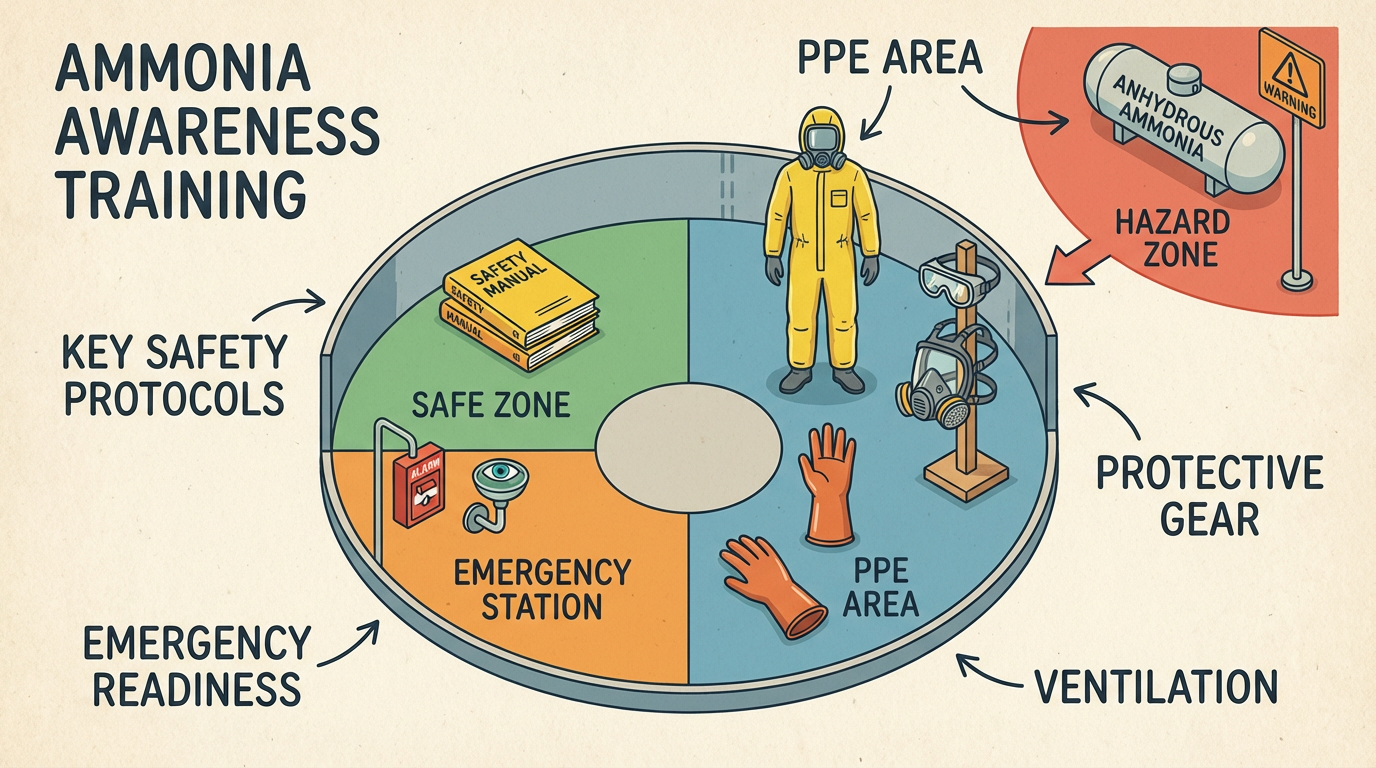
Ammonia Awareness Training
$3500.00
Ammonia Awareness Training: 5-Day Comprehensive Safety Course
Course Overview
This intensive 5-day ammonia awareness training provides comprehensive knowledge of ammonia properties, hazards, safe handling practices, and emergency response procedures. Designed for workers in ammonia production, refrigeration, fertilizer manufacturing, and any facility handling anhydrous or aqueous ammonia, this course ensures workplace safety and regulatory compliance.
Target Audience: Plant operators, maintenance technicians, safety officers, emergency responders, supervisors, warehouse workers, refrigeration technicians, and anyone working near ammonia systems or storage facilities.
Course Objectives:
Understand ammonia physical and chemical properties
Recognize ammonia hazards and health effects
Apply safe work practices and procedures
Use personal protective equipment correctly
Respond effectively to ammonia emergencies
Comply with OSHA and EPA regulations
Day 1: Ammonia Properties and Hazard Recognition
Morning Session: Introduction to Ammonia
Understanding Ammonia Fundamentals
Foundation knowledge of ammonia characteristics:
Physical and Chemical Properties:
Chemical formula: NH₃
Colorless gas with pungent, suffocating odor
Boiling point: -33.3°C (-28°F) at atmospheric pressure
Vapor density: lighter than air (0.6 relative to air)
Solubility: highly soluble in water
Flammability range: 15-28% in air (narrow range)
Auto-ignition temperature: 651°C (1204°F)
Molecular weight: 17.03 g/mol
Ammonia Forms and Applications:
Anhydrous ammonia: 99.5%+ pure, liquefied under pressure
Aqueous ammonia: 5-30% solutions in water
Industrial applications: fertilizers, refrigeration, chemicals
Production processes: Haber-Bosch synthesis
Global usage and economic importance
Storage and transportation methods
Why Ammonia Is Hazardous:
High toxicity and reactivity
Corrosive to tissues
Flammable and explosive potential
Pressure hazards in storage systems
Environmental impact of releases
Afternoon Session: Health Hazards and Exposure
Ammonia Health Effects
Understanding health risks and exposure limits:
Routes of Exposure:
Inhalation: primary route of exposure
Eye contact: severe damage risk
Skin contact: chemical burns
Ingestion: rare but extremely dangerous
Acute Health Effects:
Irritation: eyes, nose, throat at low concentrations
Respiratory effects: coughing, bronchospasm, pulmonary edema
Eye damage: corneal burns, permanent vision loss
Skin burns: chemical burns, blistering
Systemic effects: shock, cardiovascular collapse
Concentration-dependent severity
Exposure Limits:
OSHA PEL: 50 ppm (8-hour TWA)
NIOSH REL: 25 ppm (10-hour TWA)
STEL (Short-Term Exposure Limit): 35 ppm
IDLH (Immediately Dangerous to Life/Health): 300 ppm
Odor threshold: 5-50 ppm (varies by individual)
Lethal concentration: 5,000+ ppm for 30 minutes
Chronic Health Effects:
Chronic bronchitis and asthma
Permanent eye damage
Skin sensitization
Respiratory system damage
Long-term exposure consequences
Vulnerable Populations:
Pre-existing respiratory conditions
Pregnant workers
Workers with eye disorders
Skin condition sensitivities
Day 2: Safe Work Practices and Procedures
Morning Session: Engineering and Administrative Controls
Controlling Ammonia Exposure
Implementing hierarchy of controls:
Engineering Controls:
Closed-loop systems: primary containment
Ventilation systems: local exhaust and general
Gas detection and alarm systems
Emergency shutdown systems
Pressure relief devices
Secondary containment and dikes
Scrubber systems for emissions
Administrative Controls:
Standard operating procedures (SOPs)
Permit-to-work systems: hot work, confined space
Lockout/tagout (LOTO) procedures
Training and competency requirements
Buddy system for high-risk activities
Work schedules and exposure time limits
Medical surveillance programs
Safe Work Practices:
Pre-job safety briefings and JSAs
Area inspection before work
Proper tool and equipment selection
Communication protocols
Housekeeping and leak prevention
Equipment inspection and maintenance
Incident reporting procedures
Afternoon Session: Personal Protective Equipment
PPE Selection and Use
Mastering personal protective equipment:
Respiratory Protection:
Air-purifying respirators: cartridge types and limitations
Supplied-air respirators: airline systems
Self-contained breathing apparatus (SCBA): emergency use
Fit testing requirements and frequency
Cartridge change-out schedules
Proper donning and doffing procedures
Limitations and breakthrough times
Eye and Face Protection:
Chemical splash goggles
Full-face shields for severe exposure risk
Contact lens restrictions
Anti-fog treatments and maintenance
Emergency eyewash station locations
Skin Protection:
Chemical-resistant gloves: neoprene, butyl rubber
Chemical suits for major exposures
Boots and footwear requirements
Proper selection based on concentration
Decontamination procedures
PPE inspection and replacement
PPE Maintenance:
Cleaning and storage procedures
Inspection before each use
Replacement criteria and schedules
Documentation and record-keeping
Day 3: Ammonia Systems and Equipment
Morning Session: Storage and Handling Systems
Understanding Ammonia Equipment
Knowledge of ammonia systems:
Storage Systems:
Refrigerated atmospheric storage: large-scale facilities
Pressurized storage: bullets, spheres, cylinders
Tank design: ASME codes and standards
Capacity ranges and typical configurations
Insulation and refrigeration systems
Instrumentation: level, pressure, temperature
Piping and Transfer Systems:
Piping materials: carbon steel, stainless steel
Valve types: manual, automatic, emergency
Transfer pumps and compressors
Hoses and flexible connections
Loading/unloading systems
Vapor return lines and recovery
Safety Systems:
Pressure relief valves (PRVs)
Emergency isolation valves
Gas detection systems: fixed and portable
Water deluge and spray systems
Emergency shutdown (ESD) systems
Alarms and notification systems
Afternoon Session: Refrigeration Systems
Ammonia Refrigeration
Understanding ammonia refrigeration applications:
Refrigeration System Components:
Compressors: reciprocating, screw, centrifugal
Condensers and evaporators
Receiver vessels and accumulators
Expansion valves and controls
Oil separators and purge systems
Defrost systems and procedures
Operating Procedures:
Normal startup and shutdown
Capacity control and optimization
Oil management and removal
Defrost cycle operations
Monitoring and trending parameters
Abnormal condition recognition
IIAR Standards:
IIAR 2: Equipment, Design, and Installation
IIAR 3: Ammonia Refrigeration Valves
IIAR 4: Installation of Closed-Circuit Ammonia Refrigeration Systems
IIAR 6: Inspection, Testing, and Maintenance
Compliance requirements and audits
Day 4: Emergency Response and Preparedness
Morning Session: Leak Detection and Response
Recognizing and Responding to Releases
Mastering emergency response:
Leak Detection Methods:
Odor recognition (unreliable at high concentrations)
Fixed gas detection systems: electrochemical, infrared
Portable gas monitors and detectors
Visual indicators: vapor clouds, ice formation
Audible indicators: hissing, pressure release
Monitoring system alarms
Emergency Response Priorities:
Life safety first: evacuation and rescue
Property protection secondary
Environmental protection
Incident command structure
Communication and notifications
Resource mobilization
Immediate Actions:
Activate emergency alarm systems
Evacuate affected areas immediately
Account for personnel at muster points
Call emergency services (911)
Notify plant emergency response team
Isolate leak source if safe to do so
Activate water deluge systems
Personal Protective Actions:
Move upwind, uphill, and upstream
Seek shelter indoors with closed windows
Shelter-in-place procedures
Evacuation routes and assembly points
Communication during emergencies
Afternoon Session: Emergency Procedures
Emergency Management
Implementing response procedures:
Spill and Leak Response:
Small leak containment procedures
Large release evacuation zones
Water spray curtains for vapor suppression
Dilution with water (if safe and appropriate)
Isolation valve operation
Remote shutdown procedures
Fire Response:
Ammonia fire characteristics
Appropriate extinguishing agents
Let fire burn if stopping flow not possible
Cool surrounding containers
Withdraw if storage tanks involved
Firefighting tactics and safety zones
First Aid and Medical Response:
Remove victim from exposure immediately
Fresh air and rest
Eye irrigation: 15+ minutes with water
Skin washing: remove contaminated clothing
CPR if breathing stopped
Seek immediate medical attention
Never give anything by mouth to unconscious victim
Decontamination:
Emergency shower and eyewash use
Clothing removal and disposal
Equipment decontamination
Area cleanup and restoration
Waste disposal requirements
Day 5: Regulatory Compliance and Practical Exercises
Morning Session: Regulations and Standards
Legal Requirements
Understanding regulatory compliance:
OSHA Requirements:
29 CFR 1910.111: Storage and Handling of Anhydrous Ammonia
29 CFR 1910.119: Process Safety Management (PSM)
29 CFR 1910.134: Respiratory Protection
29 CFR 1910.146: Permit-Required Confined Spaces
29 CFR 1910.1200: Hazard Communication
Recordkeeping and documentation
EPA Requirements:
Risk Management Program (RMP): 40 CFR Part 68
Clean Air Act regulations
Emergency Planning and Community Right-to-Know Act (EPCRA)
Release reporting requirements (CERCLA)
Tier II reporting
Emergency action plans
DOT Regulations:
Transportation of ammonia: 49 CFR
Container specifications and placarding
Driver training requirements
Shipping papers and manifests
Emergency response information
Industry Standards:
ANSI/IIAR standards for ammonia refrigeration
ASME codes for pressure vessels
API standards (where applicable)
NFPA 58: Liquefied Petroleum Gas Code
Afternoon Session: Practical Exercises
Hands-On Training
Applying knowledge through practice:
PPE Donning and Doffing:
Proper respirator fit testing
SCBA operation practice
Chemical suit donning sequence
Decontamination procedures
Emergency equipment removal
Gas Detection Practice:
Operating portable gas monitors
Interpreting readings and alarms
Calibration and bump testing
Response to detection alarms
Multi-gas meter operations
Emergency Scenarios:
Simulated leak detection and response
Evacuation drills and procedures
First aid scenario practice
Emergency communication exercises
Tabletop emergency exercises
Incident command practice
Equipment Demonstrations:
Emergency shutdown system activation
Valve isolation procedures
Water deluge system operation
Eyewash and safety shower use
Fire extinguisher operation
Course Assessment:
Written examination on ammonia awareness
Practical skills evaluation
Emergency scenario response test
Certificate of completion issuance
Course Deliverables
Participants Receive:
Comprehensive ammonia safety manual
Quick reference cards for emergencies
PPE selection guide
Emergency response procedures
Regulatory compliance checklist
Certificate of completion (valid 3 years)
Wallet card for ammonia awareness training
Interactive Components:
Hands-on PPE practice
Gas detection equipment operation
Emergency drill participation
Group scenario discussions
Video demonstrations
Why This Training Is Critical
Key Benefits:
Prevent ammonia-related injuries and fatalities
Ensure regulatory compliance (OSHA, EPA)
Reduce liability and insurance costs
Improve emergency preparedness
Build safety culture and awareness
Protect community and environment
Legal Requirements:
OSHA mandates training for ammonia workers
PSM and RMP compliance requires documentation
Annual refresher training recommended
Site-specific training supplements